
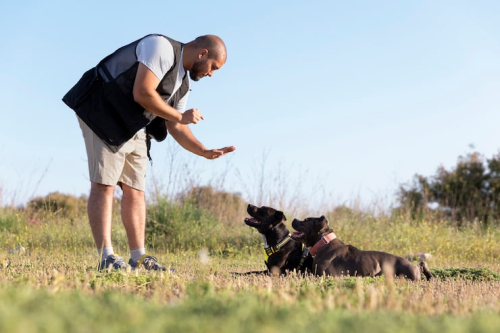
Walking your puppy through the vibrant streets of San Francisco’s Mission District can be a joy or a chaotic test of patience when they pull toward every intriguing scent or dart after a passing cyclist. For busy owners in Potrero Hill, SoMa, Dogpatch, Bernal Heights, the Castro District, and Noe Valley, finding the right way to guide their dog’s behavior makes all the difference between stressful outings and effortless companionship. In our science-backed guide, we explore proven techniques rooted in how dogs actually learn, offering practical insights tailored for urban life where space is tight and distractions never let up.
Your dog’s daily struggles pulling, mealtime anxiety, or reactivity don’t just cause stress, they chip away at the joy of being together. At Prime Paw, our positive reinforcement-based programs meet your dog where they are and build confidence, connection, and real skills. Our tailored programs in-person classes, coaching, and online resources help you enjoy calmer walks, relaxed routines, and a deeper connection. Ready for lasting change? Schedule a Prime Paw consultation today!
Why San Francisco Dog Owners Are Turning to Professional Training
The dog training services market has grown substantially, with its global value reaching USD 33.27 billion in 2024, a clear reflection of how pet parents everywhere are investing in stronger bonds and more harmonious lives with their dogs. Here in the Bay Area, the motivation hits close to home. Narrow sidewalks, heavy foot traffic, and the constant need for reliable recall near busy roads make solid training essential rather than optional. Yet not every approach delivers the calm, confident results that local owners crave. The approaches that truly work draw straight from behavioral science, emphasizing motivation over intimidation and delivering outcomes you can see on every neighborhood stroll.
The Science Behind How Dogs Learn Best
Successful training always begins with two core principles that shape every interaction: operant conditioning and classical conditioning. Operant conditioning uses clear consequences to build voluntary behaviors, adding rewards for actions you want to see more often and gently withholding them for those you prefer less. Classical conditioning, by contrast, creates positive emotional associations, so a puppy learns to view another dog across the park not as a threat but as an opportunity for calm curiosity. These principles are not distant theories they unfold in real time on SoMa streets or during backyard play in Bernal Heights, turning everyday moments into powerful learning opportunities.
Positive Reinforcement as the Cornerstone of Effective Training
Positive reinforcement has emerged as the most reliable method supported by extensive behavioral research. By adding something the dog genuinely enjoys high-value treats, enthusiastic praise, or a quick game of tug you make the desired behavior far more likely to repeat. The elegance of this approach lies in its focus on building confidence rather than suppressing fear. A young pup that offers a solid sit earns an immediate reward, forging a trusting partnership from the very first session. Trainers skilled in these techniques know that precise timing and steady consistency are everything. When delivered in a safe, supervised group environment, lessons go beyond commands to include real-world socialization, helping dogs practice polite interactions while learning to navigate the world together.
Clicker and Marker Training for Precise, Stress-Free Communication
Clicker training elevates positive reinforcement by introducing a sharp, unmistakable sound that marks the exact second your dog performs the right action. That click instantly becomes a promise of good things to come, even if you are halfway across the room or distracted by Castro District foot traffic. Many local owners rely on it to teach complex skills such as a rock-solid “leave it” amid tempting sidewalk distractions. Marker training achieves the same clarity using a simple word instead of a device. Both systems remove guesswork and speed up learning dramatically, all without any force or frustration, making them ideal for puppies still discovering their place in a bustling city.
Shaping, Capturing, and Luring: Building Skills One Small Step at a Time
Shaping rewards incremental improvements toward a larger goal, which proves especially useful when teaching a timid puppy to walk calmly on leash through Potrero Hill’s hilly terrain. Capturing simply notices and reinforces behaviors the dog already offers naturally, such as a relaxed “down” during playtime. Luring gently guides movement with a treat before fading the lure once understanding clicks into place. These gentle, progressive techniques adapt beautifully to each dog’s unique personality and pace whether the pup is outgoing and energetic in Dogpatch or more reserved around new faces in Noe Valley. Personalization ensures every lesson feels relevant and achievable rather than overwhelming.
Desensitization and Counter-Conditioning for Everyday Urban Stressors
City living presents puppies with an endless stream of surprises: blaring horns, crowded elevators, sudden skateboarders, and the unpredictable energy of Mission District crowds. Desensitization slowly increases exposure to these triggers at a level the dog can comfortably handle, while counter-conditioning pairs them with something wonderful like premium treats or favorite toys. The outcome is a dog that feels secure instead of reactive. Owners who weave these methods into supervised group practice frequently notice quicker progress because the training setting closely mirrors real daily walks through the neighborhood, turning potential problems into manageable, even enjoyable experiences.
Relationship-Based and Mirror Training: Strengthening the Human-Dog Bond
Relationship-based training places the emotional connection between owner and dog at the center, using play, trust, and consistent communication to encourage willing cooperation. Mirror or model-rival training lets puppies learn by observing others succeed and earn rewards particularly effective in small group classes where young dogs watch calm, polite behavior in their peers. These methods flourish when trainers customize every detail to the individual dog’s needs instead of following a rigid script. The result is a deeper partnership that extends far beyond the training floor and into every shared adventure around San Francisco.
Other Approaches and Why Positive Methods Lead the Way
Balanced training combines rewards with mild corrections, while purely correction-based methods lean more heavily on consequences to discourage unwanted actions. Electronic collars and certain punishment strategies still appear in some programs, but the wider scientific community consistently favors minimally aversive strategies. The Least Intrusive, Minimally Aversive framework helps ethical trainers prioritize positive solutions first. Puppy-specific programs focus on the critical developmental window between eight and sixteen weeks, emphasizing early socialization that prevents many future behavioral challenges before they ever take root.
Addressing the Most Common Concerns About Puppy Training
Prospective clients often voice three understandable hesitations. Cost can feel daunting at first, yet when weighed against chewed furniture, lost work hours, or the daily stress of unmanaged behavior, professional guidance quickly proves its value. Doubts about effectiveness are common “Will this actually work for my puppy?” but the evidence is clear when methods align with the dog’s individual learning style and the trainer tailors the plan accordingly. Time constraints matter most in a city with demanding schedules, yet efficient once- or twice-weekly group sessions solve this by combining structured training with essential socialization in one safe, supervised location. Progress continues between classes because the format respects real life while delivering consistent results.
Choosing the Best Path Forward for Your Bay Area Puppy
With so many options available, the clearest choice starts with positive reinforcement delivered by experienced trainers who truly understand local urban realities. Personalized programs that read each dog’s body language in the moment, adjust instantly, and integrate socialization into every lesson produce visible improvements you can enjoy on your next walk through Noe Valley or along the Dogpatch waterfront. The objective is never overnight perfection. It is the steady development of a confident, happy companion who thrives alongside you in the city you both love. When training becomes a collaborative, rewarding experience rather than a corrective chore, the bond grows stronger and everyday life flows more smoothly than you once thought possible.
Puppies who complete these thoughtfully designed programs do far more than master commands. They move through urban chaos with calm curiosity and genuine confidence. Owners consistently report fewer leash struggles, reduced reactivity, and a noticeable increase in shared enjoyment during outings. If your dog is still learning the rhythms of Mission Street or the staircases of Potrero Hill, the science leaves little room for doubt: positive, personalized guidance delivers lasting change. The only remaining question is which approach will best unlock your puppy’s happiest, most well-behaved self. Begin with the fundamentals, remain consistent, and watch the transformation unfold one rewarding, tail-wagging moment at a time.
Frequently Asked Questions
What is the most effective dog training method recommended by behavioral science?
Positive reinforcement is widely regarded as the most reliable, science-backed training method. It works by rewarding desired behaviors with treats, praise, or play, which encourages dogs to repeat those behaviors while building confidence and trust. Techniques like clicker training and marker training complement this approach by precisely marking the exact moment a dog performs correctly, speeding up learning without force or frustration.
How do desensitization and counter-conditioning help puppies handle urban environments?
Desensitization gradually exposes puppies to stressful stimuli such as loud traffic, crowds, or skateboarders at manageable levels so they don’t become overwhelmed. Counter-conditioning pairs those triggers with positive experiences like high-value treats or favorite toys, replacing fear with calm curiosity. Together, these techniques are especially valuable for city dogs who regularly encounter unpredictable sights, sounds, and situations on daily walks.
Is professional puppy training worth the cost for busy dog owners?
Yes when weighed against the long-term costs of chewed furniture, stress, and unmanaged behavior, professional training quickly proves its value. Structured group sessions, typically once or twice a week, are designed to respect busy schedules while combining obedience training with essential socialization in one supervised setting. Dogs who complete these programs tend to show fewer leash struggles, reduced reactivity, and greater confidence in everyday situations.
Disclaimer: The above helpful resources content contains personal opinions and experiences. The information provided is for general knowledge and does not constitute professional advice.
You may also be interested in: Behavioral Experts Advise on Helping Dogs Cope With Fireworks and Thunderstorms
Your dog’s daily struggles pulling, mealtime anxiety, or reactivity don’t just cause stress, they chip away at the joy of being together. At Prime Paw, our positive reinforcement-based programs meet your dog where they are and build confidence, connection, and real skills. Our tailored programs in-person classes, coaching, and online resources help you enjoy calmer walks, relaxed routines, and a deeper connection. Ready for lasting change? Schedule a Prime Paw consultation today!
Powered by flareAI.co