
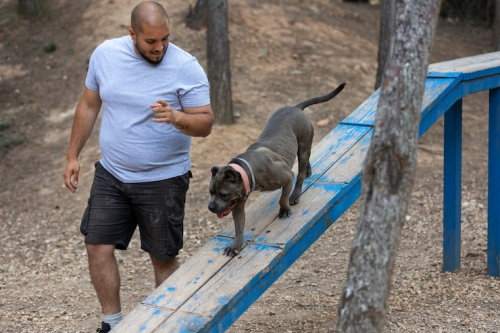
Picture a young Labrador pulling hard on the leash during a morning walk through SoMa, or a playful pup ignoring every call to come in the Dogpatch. For years, owners turned to the same time-tested fixes yanks on the collar, stern voices, even dominance displays meant to remind the dog who was boss. Yet something has shifted. As explored in force-free approaches, a gentler, science-backed philosophy is quietly rewriting the rules of canine education across San Francisco and beyond.
Your dog’s daily struggles pulling, mealtime anxiety, or reactivity don’t just cause stress, they chip away at the joy of being together. At Prime Paw, our positive reinforcement-based programs meet your dog where they are and build confidence, connection, and real skills. Our tailored programs in-person classes, coaching, and online resources help you enjoy calmer walks, relaxed routines, and a deeper connection. Ready for lasting change? Schedule a Prime Paw consultation today!
The Old School: Why Dominance Once Ruled
Traditional training drew straight from the idea that dogs operate like wolves in a rigid pack. Handlers were told to establish themselves as the alpha through physical corrections and assertive posture. Choke chains, prong collars, and sharp leash pops became standard tools. The logic felt straightforward: misbehavior demanded immediate consequence, or the dog would never learn respect.
These methods produced quick results in the moment. A puppy stopped jumping on guests after a firm knee to the chest. A dog quit barking when sprayed with water. Owners felt they had taken control. But the fixes often came with hidden costs fear, anxiety, and a relationship built on avoidance rather than trust. Many dogs learned to suppress behavior only while the trainer was watching, only to revert once the pressure disappeared. In neighborhoods like the Mission District and Potrero Hill, where dogs share crowded sidewalks every day, that cycle of tension and temporary compliance left both pets and people exhausted.
Science Steps In: The Case for Positive Reinforcement
Force-free training rests on decades of behavioral research showing that dogs learn best when rewarded for desired actions rather than punished for mistakes. Positive reinforcement often shortened to R+ marks the exact moment a dog does something right and immediately follows with something the dog loves: a treat, a toy, a game of tug, or enthusiastic praise. No force, no fear, just clear communication.
Trainers who follow this path focus on what they want the dog to do, not what they want to stop. Instead of punishing a puppy for chewing shoes, they redirect to a stuffed Kong and celebrate wildly when those teeth hit the right target. The approach builds confidence because the dog discovers that good choices pay off handsomely. Over time, the behaviors owners desire become the dog’s default setting. This method proves especially effective for puppy obedience training near me searches, where busy San Francisco owners need practical skills that stick without constant confrontation.
Why Force-Free Methods Are Winning Converts
Pet owners today want more than obedience they want partnership. As disposable incomes increase, pet owners are more willing to spend on premium and customized services that enhance their pet’s comfort and lifestyle. This shift is no accident. More people see their dogs as family members rather than working animals, and they refuse to use methods that cause distress.
Force-free training also delivers longer-lasting results. Dogs trained without fear show lower stress hormones and greater willingness to try new things. Owners report stronger bonds and fewer behavioral regressions. The old dominance model often masked problems; the new approach solves them at the root by changing the dog’s emotional response. Across SoMa and Dogpatch, where community parks buzz with activity, this kinder philosophy is turning everyday walks into genuine pleasures instead of power struggles.
PrimePaw’s Model: Personalized Training Meets Real-World Socialization
In San Francisco’s tight-knit neighborhoods, PrimePaw has built its reputation on exactly this philosophy. The company specializes in positive reinforcement–based canine education and care, creating science-backed programs that emphasize trust, confidence, and joyful learning rather than force. Every puppy receives a plan shaped by its individual personality, energy level, and home environment.
What sets the program apart is the combination of training and socialization in one safe, supervised location. Puppies practice new skills while meeting carefully screened playmates under the watchful eyes of experienced trainers. No chaotic dog parks. No guessing whether another dog is friendly. Just structured play that teaches impulse control, polite greetings, and calm focus all while the owner learns how to continue the work at home. This personalized puppy training based on each dog’s behavior and needs, paired with positive reinforcement methods, creates results that feel natural and sustainable for families in Bernal Heights, the Castro District, and Noe Valley alike.
The Power of Combined Training and Socialization
By merging skill-building with safe play sessions, PrimePaw turns what could be two separate challenges into one seamless experience. Owners gain confidence watching their puppies thrive in real time, and the dogs learn that good behavior opens doors to fun rather than ending it.
Overcoming the Usual Doubts
Many owners hesitate at first. The most common concerns are easy to understand: training feels expensive, results seem uncertain, and busy schedules leave little room for weekly classes. Yet the data and day-to-day experience tell a different story.
- Cost: While premium programs require investment, the alternative repeated behavior issues, damaged furniture, or even rehoming often costs far more in stress and money.
- Effectiveness: Positive reinforcement does not mean permissiveness. Clear boundaries still exist; they are simply enforced with guidance instead of intimidation. Dogs learn faster because they stay eager to participate.
- Time: Sessions are efficient precisely because they combine training and socialization. Owners leave each class with practical homework that fits into short daily routines rather than hour-long drills.
Trainers address these objections head-on, showing measurable progress within the first few weeks and equipping owners with tools that work even on the busiest days. For those searching puppy classes near me or best puppy training near me, the proof appears in calmer homes and happier dogs almost immediately.
Puppy Classes Near Me: Why Location Still Matters in San Francisco
When owners type “puppy training near me” or “puppy classes near me” into their phones, they are looking for more than convenience. They want a program woven into their daily life. PrimePaw serves the Mission District, Potrero Hill, SoMa, Dogpatch, Bernal Heights, the Castro District, and Noe Valley places where dogs and people already share sidewalks, parks, and coffee shops.
Classes held in these neighborhoods mean owners can walk to sessions, practice new skills on familiar streets, and reinforce lessons during real errands. A puppy that learns polite leash manners in Potrero Hill can immediately test them on the way to the corner market. The local focus turns training from an abstract obligation into a natural part of neighborhood life. Puppy training classes near me and puppy classes sf become more than search terms they become the bridge between a chaotic puppy phase and a confident adult dog.
Building Relationships That Last
The true measure of any training program shows up long after the last class. Dogs trained with positive methods carry themselves differently heads up, tails loose, eyes bright with expectation rather than worry. Owners move through their days without constant correction or embarrassment. Walks become enjoyable again. Guests arrive without dread.
This shift ripples outward. Confident dogs visit dog-friendly cafés in the Castro, join family hikes in Bernal Heights, and greet neighbors with wagging tails instead of anxious barking. The community itself grows calmer and more connected, one well-adjusted puppy at a time. Personalized puppy training that respects each dog’s unique needs creates bonds built on trust rather than control.
The Road Ahead for Canine Education
Force-free approaches have not erased every old habit overnight. Some trainers still cling to dominance language because it feels familiar. Yet the momentum is unmistakable. More veterinary behaviorists recommend R+ methods. Shelters adopt reward-based programs to increase adoption rates. Pet owners share success stories on Instagram and Facebook, turning neighbors into advocates.
In the end, the change is about more than commands or tricks. It is about recognizing that dogs thrive when they feel safe, understood, and genuinely excited to learn. San Francisco’s dog community is proving that the gentlest path can also be the most effective one joyful session, one personalized plan, and one stronger bond at a time. Puppy dog training near me and puppy obedience training near me searches are leading more families to this better way, and the results speak for themselves in every wagging tail and relaxed owner smile.
Frequently Asked Questions
What is force-free or positive reinforcement dog training, and how does it differ from traditional methods?
Force-free training (also called positive reinforcement or R+ training) rewards dogs for correct behaviors using treats, toys, or praise rather than punishing mistakes with physical corrections or intimidation. Unlike traditional dominance-based methods that relied on tools like choke chains or prong collars, force-free training focuses on what you *want* the dog to do building confidence and genuine understanding. Research shows dogs trained this way learn faster, retain behaviors longer, and develop lower stress levels than those trained under fear-based approaches.
Does positive reinforcement puppy training actually work, or is it too permissive?
Positive reinforcement is not the same as permissiveness clear boundaries still exist, but they’re taught through guidance and consistent rewards rather than intimidation. Dogs trained with R+ methods stay eagerly engaged, which means they often learn more quickly than dogs trained under fear or pressure. Studies show these dogs exhibit fewer behavioral regressions and lower stress hormones, making the results more durable in real-world environments like busy city sidewalks and dog-friendly spaces.
Why should I choose a local puppy training class near me instead of training my dog at home?
Local puppy classes offer structured socialization alongside skill-building something home training alone can’t replicate. Puppies practice obedience in real environments with screened playmates and experienced trainers supervising, which teaches impulse control and polite behavior in the actual settings where they’ll need it most. Training in your own neighborhood also lets you immediately reinforce new skills on familiar streets and during everyday errands, making lessons stick faster and more naturally for both dog and owner.
Disclaimer: The above helpful resources content contains personal opinions and experiences. The information provided is for general knowledge and does not constitute professional advice.
You may also be interested in: Behavioral Experts Advise on Helping Dogs Cope With Fireworks and Thunderstorms
Your dog’s daily struggles pulling, mealtime anxiety, or reactivity don’t just cause stress, they chip away at the joy of being together. At Prime Paw, our positive reinforcement-based programs meet your dog where they are and build confidence, connection, and real skills. Our tailored programs in-person classes, coaching, and online resources help you enjoy calmer walks, relaxed routines, and a deeper connection. Ready for lasting change? Schedule a Prime Paw consultation today!
Powered by flareAI.co