
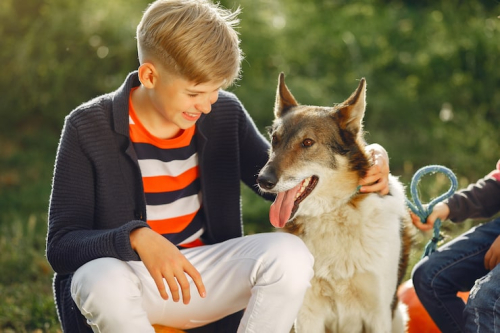
Many dog owners are surprised when a previously well-behaved puppy suddenly starts ignoring cues, pulling harder on the leash, or acting as if basic training has disappeared. This phase is often misunderstood as regression or stubbornness, but it is more accurately a normal developmental stage in a dog’s life. Understanding what is happening during adolescence can help owners respond with more patience, consistency, and effective training strategies rather than frustration.
Your dog’s daily struggles pulling, mealtime anxiety, or reactivity don’t just cause stress, they chip away at the joy of being together. At Prime Paw, our positive reinforcement-based programs meet your dog where they are and build confidence, connection, and real skills. Our tailored programs in-person classes, coaching, and online resources help you enjoy calmer walks, relaxed routines, and a deeper connection. Ready for lasting change? Schedule a Prime Paw consultation today!
Understanding the Teenage Dog Stage
Dog adolescence is a transitional period between puppyhood and adulthood when physical growth, hormonal changes, and brain development all intersect. During this time, behavior can appear inconsistent: one day a dog responds perfectly to cues, and the next day seems to forget them entirely. This is not random it reflects a developmental shift similar in many ways to human teenage years.
Research has identified this phase as a distinct developmental window in which dogs may temporarily show reduced responsiveness to familiar training cues, particularly when those cues come from their primary caregiver. A scientific study on adolescent-phase behavior in dogs observed that around eight months of age, dogs were less likely to obey familiar commands compared to earlier stages, even though their overall learning ability remained intact. This suggests that the behavior is not a failure of training but a temporary shift in social and emotional responsiveness.
A 2020 study published in Biology Letters further expands on this pattern, showing that adolescence in dogs represents a clearly identifiable developmental phase rather than random behavioral inconsistency. Around the eight-month mark, dogs were significantly less likely to obey familiar cues from their primary caregiver, while their responsiveness to unfamiliar handlers actually improved. This indicates a carer-specific shift rather than generalized disobedience. The findings also suggest that dogs with signs of less secure attachment may experience stronger behavioral fluctuations, including increased separation-related behaviors during this window. Importantly, the study emphasizes that this dip in responsiveness is temporary, with most dogs returning to higher trainability as they mature, reinforcing the importance of patience and consistent reinforcement during this sensitive developmental stage.
Why Adolescent Dogs Seem to “Forget” Training
One of the most confusing aspects of adolescence is the appearance of regression. Dogs that once responded reliably to commands may begin ignoring recall, hesitating on leash, or showing selective listening. This often leads owners to assume training has failed, when in reality, the dog’s developmental stage is influencing behavior.
Studies show that adolescent dogs can display what appears to be a temporary conflict in responsiveness, especially toward their primary caregiver. The same research highlights that responses to unfamiliar handlers may actually improve during this period, reinforcing the idea that the issue is not general disobedience but a specific relational shift. The adolescent training response study emphasizes that this phase is temporary and typically resolves as dogs mature.
This is also a time when separation-related behaviors and heightened sensitivity can emerge. Dogs may become more reactive to environmental stimuli, more easily distracted, or more uncertain in situations they previously handled well. These changes are often tied to ongoing brain development and hormonal fluctuations rather than intentional defiance.
The Emotional Parallel Between Dogs and Human Adolescence
Dog adolescence mirrors human teenage development in many meaningful ways. Just as teenagers seek independence and test boundaries, adolescent dogs begin to explore autonomy within their environment and relationships. This can lead to behaviors that feel inconsistent or unpredictable to owners.
A New York Times perspective on adolescent dogs describes this stage as a period of heightened sensitivity and independence-seeking behavior, often accompanied by what appears to be disobedience or selective listening. These shifts can place strain on the human-dog bond if they are misunderstood as behavioral failure rather than developmental change.
This perspective is further reinforced by broader behavioral research and commentary, which frames canine adolescence as a period of emotional reorganization rather than simple disobedience. The New York Times discussion highlights how dogs during this stage may exhibit increased vigilance, new fears, and inconsistent recall, especially in relation to their primary caregiver. These behaviors mirror adolescent human patterns of risk-taking and boundary testing, and are associated with underlying brain and hormonal development. Rather than signaling a weakening bond, these changes reflect a temporary restructuring of how dogs process social cues and environmental input. Recognizing this helps owners respond with empathy and consistency, reducing frustration during a naturally turbulent developmental window.
Common Behavior Changes in Teenage Dogs
Adolescent dogs may exhibit a wide range of behavioral changes, many of which are temporary but challenging for owners to manage. These include increased distractibility, reduced recall reliability, leash pulling, and occasional reactivity toward other dogs or environmental triggers. Some dogs also begin testing boundaries more frequently, especially in familiar environments.
Leash behavior is a particularly common concern during this stage. A dog that previously walked calmly may suddenly develop leash reactivity teenage dogs behavior patterns such as lunging, barking, or excessive excitement when encountering other dogs or stimuli. These behaviors are not uncommon during adolescence and often reflect a combination of curiosity, hormonal change, and developing impulse control rather than aggression.
Owners often describe this period as a “puppy to adolescent regression training” challenge, where previously learned skills appear inconsistent. However, this inconsistency is usually temporary and improves with structured reinforcement and predictable routines. Understanding adolescent dog behavior problems as developmental rather than behavioral failure is key to maintaining long-term training success.
How Training Approaches Should Adapt
Training a teenage dog requires a shift in expectations and methods rather than an overhaul of fundamentals. Positive reinforcement remains the most effective approach, but consistency and timing become even more critical during this stage. Dogs in adolescence benefit from clear boundaries, predictable reinforcement, and short, focused training sessions that match their attention span.
Instead of increasing punishment or frustration when a dog fails to respond, it is more effective to reinforce desired behaviors immediately and reduce opportunities for confusion. For example, practicing recall in low-distraction environments before gradually increasing difficulty helps rebuild reliability without overwhelming the dog.
Owners often search for how to train teenage dog behaviors more effectively, and the answer typically lies in adjusting expectations rather than introducing entirely new techniques. Training teenage dogs is less about correcting disobedience and more about guiding them through a developmental phase where impulse control and emotional regulation are still forming.
Living with Adolescent Dogs in Urban Environments
In dense urban neighborhoods with high sensory stimulation, adolescent dogs may experience additional challenges. Environments filled with movement, noise, and social interaction can amplify distraction and reactivity. This is especially relevant for dog owners navigating busy streets, shared green spaces, and high-traffic walking routes.
For many owners, daily walks become a training opportunity rather than a simple routine activity. Structured exposure to controlled distractions, combined with reinforcement of calm behavior, helps adolescent dogs learn how to process complex environments without becoming overwhelmed. Consistency in these environments is especially important during the teenage dog behavior changes phase, when external stimuli can easily disrupt training progress.
It is also common for adolescent dogs in urban settings to show increased leash tension or inconsistent recall, particularly in areas with frequent dog encounters. These behaviors are not unusual and often improve as the dog matures and gains confidence through repeated, positive experiences.
Building Stability Through Consistency and Support
The most effective way to navigate adolescence is through steady, predictable structure combined with patient reinforcement. Dogs at this stage are not resistant to learning they are reorganizing how they interpret social cues and environmental information. This means training success depends heavily on repetition, clarity, and emotional consistency from the owner.
Many owners find that professional guidance during this stage can help reduce frustration and accelerate progress. Structured training programs that focus on positive reinforcement dog training adolescent methods can provide both clarity and confidence during a period that often feels unpredictable. Support during adolescence is less about correcting behavior and more about maintaining a stable learning environment while the dog matures.
Understanding adolescent dog behavior problems as temporary developmental challenges rather than permanent behavioral issues helps preserve the human-animal bond and improves long-term outcomes. With the right approach, this stage becomes not a setback, but a foundation-building period for a well-adjusted adult dog.
Turning a Challenging Phase Into Long-term Success
Adolescence in dogs is a natural and necessary stage of development, even if it temporarily disrupts training progress and household routines. What may feel like regression is often a reflection of deeper cognitive and emotional growth. By understanding the science behind this phase and adapting training approaches accordingly, owners can navigate it with greater confidence and less frustration.
With consistency, patience, and appropriate reinforcement strategies, adolescent dogs typically emerge from this stage with stronger skills and a more stable behavioral foundation. Rather than viewing this period as a setback, it can be seen as an essential step toward building a resilient, well-trained adult dog capable of thriving in complex environments and maintaining a strong bond with their owner.
Frequently Asked Questions
Why is my teenage dog suddenly ignoring commands or acting like it forgot its training?
This is a very common experience during dog adolescence and is usually not true regression in training. Teenage dogs go through hormonal and neurological changes that temporarily affect how reliably they respond, especially to their primary caregiver. Their learning ability is still intact, but their responsiveness can feel inconsistent as they test independence and process new distractions. With consistent, patient reinforcement, this phase typically improves as the dog matures.
How do you train a teenage dog that is pulling on the leash or becoming reactive?
Leash pulling and increased reactivity are common in adolescent dogs due to heightened excitement, curiosity, and reduced impulse control. The most effective approach is positive reinforcement combined with structured, low-distraction practice sessions. Gradually exposing the dog to real-world environments while rewarding calm behavior helps build better leash manners over time. Consistency and calm guidance are more effective than punishment during this developmental stage.
Is it normal for adolescent dogs to have worse recall and behavior during training?
Yes, reduced recall reliability is a well-documented part of the teenage dog stage and is often linked to temporary changes in attention and emotional regulation. Dogs may appear less responsive during this period, especially in distracting environments or with familiar handlers. This does not mean they have forgotten training, but rather that their priorities and sensitivity to stimuli are shifting. With repetition and positive reinforcement, recall usually strengthens again as they mature.
Disclaimer: The above helpful resources content contains personal opinions and experiences. The information provided is for general knowledge and does not constitute professional advice.
You may also be interested in: Positive Reinforcement Dog Training Guide
Your dog’s daily struggles pulling, mealtime anxiety, or reactivity don’t just cause stress, they chip away at the joy of being together. At Prime Paw, our positive reinforcement-based programs meet your dog where they are and build confidence, connection, and real skills. Our tailored programs in-person classes, coaching, and online resources help you enjoy calmer walks, relaxed routines, and a deeper connection. Ready for lasting change? Schedule a Prime Paw consultation today!
Powered by flareAI.co