
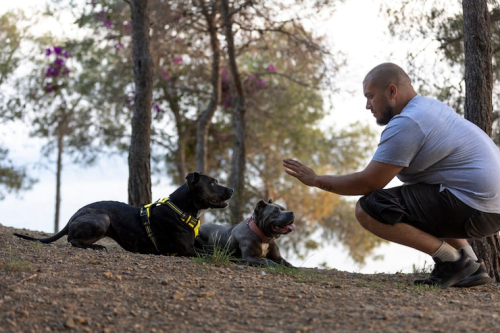
Many dog owners in dynamic city environments encounter daily situations that test their pet’s composure. Crowded sidewalks, passing cyclists, unfamiliar dogs, and ambient city sounds create a level of stimulation far beyond what most home training addresses. Puppies, adolescent dogs, and newly adopted pets frequently struggle with these variables, resulting in pulling on the leash, excessive barking, or anxious reactions. Group dog training classes offer a structured way to develop the focus and adaptability dogs need to handle such conditions successfully. Through guided practice with other dogs and handlers present, participants build skills that hold up during actual neighborhood walks and outings.
Your dog’s daily struggles pulling, mealtime anxiety, or reactivity don’t just cause stress, they chip away at the joy of being together. At Prime Paw, our positive reinforcement-based programs meet your dog where they are and build confidence, connection, and real skills. Our tailored programs in-person classes, coaching, and online resources help you enjoy calmer walks, relaxed routines, and a deeper connection. Ready for lasting change? Schedule a Prime Paw consultation today!
Understanding the Demands of City Dog Life
Urban living presents dogs with a constant stream of novel stimuli. A simple walk can involve navigating around groups of people, avoiding obstacles like scooters or strollers, and responding calmly when another dog appears on the path. For dogs without prior experience in similar settings, these moments often trigger instinctive reactions that disrupt the walk and create stress for the handler. Newly adopted dogs, in particular, may carry uncertainty from previous environments, making early structured exposure valuable for building confidence. The goal for many owners becomes helping their dog remain attentive and responsive even when distractions multiply, turning potentially chaotic outings into manageable, even enjoyable, experiences.
Without preparation for these conditions, dogs may develop patterns of over-arousal or avoidance that limit where owners feel comfortable taking them. A pet that lunges at every passing dog or freezes at unexpected noises restricts daily routines and reduces opportunities for enrichment. Owners often find themselves choosing quieter routes or avoiding certain times of day simply to prevent incidents. This reality underscores why training focused solely on indoor performance leaves a significant gap when real life involves movement, sound, and social encounters at every turn.
Why Training in Isolation Falls Short for Real-world Application
Basic obedience work conducted in quiet, familiar spaces lays an important foundation. Dogs can master cues like sit, stay, and come when nothing competes for their attention. Yet real life rarely offers such simplicity. When a dog encounters movement, noise, or social triggers outside the home, previously reliable responses often diminish. Without practice amid realistic levels of activity and other animals, the skills remain context-specific rather than generalizable. This limitation explains why many guardians find that home progress does not automatically translate to smooth behavior on busy streets or in shared green spaces.
Training that incorporates variable conditions from the start tends to produce more robust results. A dog that has only practiced in empty rooms or one-on-one settings has no reference for maintaining composure when a skateboarder approaches or a group of children runs nearby. The absence of peer presence also means missed chances to rehearse calm coexistence and appropriate responses to social signals from other dogs. Over time, this can leave both dog and guardian frustrated during everyday outings, as the learned behaviors do not transfer well to the complexity of shared public spaces.
How Group Dog Training Classes Build Practical Focus and Adaptability
Group formats deliberately introduce the kinds of elements dogs will face daily. Multiple handlers and dogs move through the space, creating opportunities to practice maintaining attention despite nearby activity. Sessions often include exercises for loose-leash walking while others pass, polite approaches to unfamiliar dogs, and reliable responses to cues under mild pressure. This setup helps dogs develop impulse control and the ability to recover quickly from distractions. Guardians simultaneously refine their timing and handling, learning to support their dog effectively in the moment. Over time, these repeated, supported exposures foster greater confidence and calmer responses that carry directly into everyday routines.
These sessions focus on building real world dog training skills that matter most during daily life. Rather than isolated drills, the emphasis stays on functional behaviors such as walking politely past distractions and offering appropriate greetings. The collaborative atmosphere encourages dogs to make good choices even when excited, strengthening their capacity to stay engaged with their handler amid competing stimuli. This approach aligns closely with how dogs actually experience the world outside the home.
Modern perspectives on dog training emphasize collaboration and clear communication between guardians and their pets rather than rigid obedience alone. Group classes excel here by simulating real-life environments where dogs must maintain focus despite the presence of other dogs, people, and distractions. This setup builds genuine real-world skills, such as polite greetings, loose-leash walking, and reliable responses to commands under varying conditions. Guardians learn to read their dog’s signals, apply consistent positive techniques, and adjust their own behavior to support learning. Research and expert insights highlight that dogs trained in social group settings often develop better impulse control, confidence, and adaptability compared to those trained solely in isolation. These experiences reduce common issues like reactivity or anxiety in public spaces, making daily life smoother for both parties. Puppy and young dog programs particularly leverage the group dynamic for natural socialization opportunities while reinforcing foundational manners. The result is not just a dog that performs commands but one that understands how to exist comfortably in human society, strengthening the human-canine bond and promoting long-term behavioral success.
Structured Socialization Versus Unstructured Encounters
Early socialization plays a critical role in shaping adult behavior. While casual interactions at dog parks may seem like natural exposure, they frequently lack the supervision and structure young dogs require. Unpredictable play or overwhelming numbers of dogs can lead to negative associations or fearful responses that persist. Professionally facilitated group classes, by contrast, maintain age-appropriate groupings, monitor interactions closely, and intervene to keep experiences positive. Dogs learn to interpret body language accurately, practice appropriate play behaviors, and form positive connections with new people and dogs in a controlled manner. This foundation proves especially helpful for preventing future reactivity and supporting calm coexistence in varied settings.
Unstructured environments like dog parks can sometimes overwhelm young dogs or lead to negative experiences, underscoring the value of guided group training classes for proper socialization. Professional-led sessions offer safe, age-appropriate interactions that teach puppies essential social cues, body language interpretation, and appropriate play behaviors in a controlled manner. This foundation proves critical for building confidence and preventing future fear-based responses in real-world settings. Experts recommend early exposure through puppy classes as a superior alternative to casual park visits, focusing on positive associations with new people, dogs, and environments during the critical developmental period. Such training helps dogs learn to remain calm and responsive even when faced with novel stimuli, directly supporting skills like polite greetings and relaxed coexistence. For San Francisco dog owners, these structured experiences align perfectly with urban living demands, where dogs frequently encounter crowds, traffic, and other pets. Guardians gain practical tools for managing behavior on walks and in public, reducing stress and enhancing enjoyment of shared activities. Overall, group classes create well-adjusted companions equipped for life’s unpredictability, far beyond what random encounters can achieve.
dog training classes for socialization provide exactly this kind of guided framework. Facilitators create safe opportunities for puppies and adolescents to engage without the risks of unstructured environments. The focus remains on building positive associations during the developmental period when dogs are most receptive to new experiences. As a result, dogs gain the social toolkit needed for confident navigation of busy environments later on.
For dog owners navigating busy urban environments, where dogs regularly encounter crowds, traffic, and other pets, these guided sessions align well with the demands of daily life. Guardians acquire practical tools for managing behavior during walks and public interactions, which reduces overall stress and increases enjoyment of shared activities.
Enhancing Guardian-dog Communication and Addressing Reactivity
Group training benefits extend to the human side of the partnership. Handlers gain insight into reading their dog’s subtle signals of arousal, discomfort, or excitement. They practice consistent cue delivery and learn when to adjust their own position or energy to help the dog succeed. This mutual learning strengthens the bond and improves outcomes across contexts. For dogs showing signs of leash reactivity or public anxiety, the gradual, supported exposure in a group setting allows practice of alternative behaviors, such as orienting toward the handler or settling on cue.
Many leash reactivity training classes incorporate group elements precisely because the presence of other dogs provides controlled practice opportunities at safe distances. Owners leave with actionable strategies they can apply immediately on neighborhood outings, turning challenging moments into opportunities for reinforcement and progress. The shared learning environment also lets handlers observe different techniques and receive feedback tailored to their specific dog, accelerating improvement for both members of the team.
Translating Class Progress Into Smoother Daily Experiences
The true measure of any training approach lies in how well it serves real life. Dogs that have practiced focus amid distractions in class typically demonstrate improved loose-leash walking, more appropriate greetings, and quicker recovery when surprises occur during actual walks. Puppy socialization classes and dog obedience group classes lay groundwork that supports later training focused on specific issues. As dogs become more adaptable, owners find greater freedom to include their pets in a wider range of activities without constant management.
Consistency between class practice and home reinforcement accelerates results. Simple games introduced in sessions, such as focus exercises or settle behaviors, become tools owners use during real outings. Over weeks and months, these accumulated skills compound, leading to dogs that handle new stimuli with greater poise whether passing construction zones, visiting friends, or simply navigating daily foot traffic. The outcome includes more relaxed routines and a stronger sense of partnership between dog and guardian.
Selecting Group Training for Sustainable Results
When exploring options for supporting a dog’s development, programs that prioritize positive methods and realistic practice environments tend to deliver the most transferable benefits. Group dog training classes that simulate everyday conditions help dogs build the resilience and manners necessary for urban living. Whether the focus is foundational socialization for a young dog or refining responses for an adolescent or newly adopted pet, the collaborative, distraction-inclusive format provides a clear path toward reliable real-world performance.
Owners searching for dog training near me San Francisco will find that group formats particularly address the unique demands of local urban living. The skills developed through dog behavior group training ultimately contribute to more harmonious daily interactions, greater owner confidence, and a deeper bond that makes shared life more rewarding for everyone involved.
Frequently Asked Questions
Why does my dog pull on the leash during walks in busy environments?
Dogs often pull on the leash due to heightened sensory stimulation, especially in busy or urban environments. New sights, sounds, and smells can create excitement, anxiety, or overstimulation, leading to stronger pulling behavior. Rather than stubbornness, leash pulling is usually a response to overload and a lack of learned loose-leash walking skills.
How can I train my dog to walk on a loose leash using positive reinforcement?
Loose-leash walking is a learned skill that improves with consistent training and positive reinforcement. Short, focused sessions in low-distraction environments help dogs understand expectations before gradually adding real-world challenges. Using clear cues, rewards for staying close, and separating sniff walks from structured training walks all help build reliable leash manners over time.
What equipment helps reduce dog leash pulling during training?
Proper equipment like a well-fitted front-clip harness and a dual-handled leash can provide immediate support during training. These tools help redirect your dog’s movement and reduce strain without relying on force. While helpful, they work best when combined with consistent training, patience, and reinforcement of loose-leash behavior.
Disclaimer: The above helpful resources content contains personal opinions and experiences. The information provided is for general knowledge and does not constitute professional advice.
You may also be interested in: Leash Training and Urban Manners for City Dogs
Your dog’s daily struggles pulling, mealtime anxiety, or reactivity don’t just cause stress, they chip away at the joy of being together. At Prime Paw, our positive reinforcement-based programs meet your dog where they are and build confidence, connection, and real skills. Our tailored programs in-person classes, coaching, and online resources help you enjoy calmer walks, relaxed routines, and a deeper connection. Ready for lasting change? Schedule a Prime Paw consultation today!
Powered by flareAI.co