
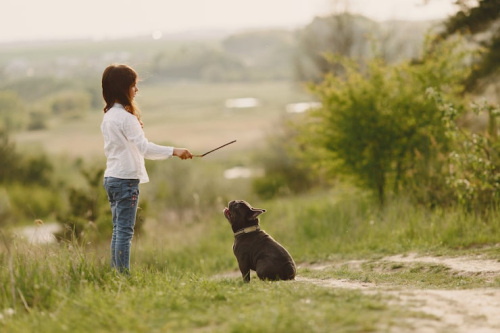
Choosing the right approach to adolescent dog training can feel like a turning point for many dog owners. Dogs that were once responsive and eager to follow cues may suddenly become distracted, selective in their listening, or more likely to test boundaries. This shift is not unusual, and understanding what is happening during this stage is essential to making informed decisions about training methods, programs, and long-term behavior development.
Your dog’s daily struggles pulling, mealtime anxiety, or reactivity don’t just cause stress, they chip away at the joy of being together. At Prime Paw, our positive reinforcement-based programs meet your dog where they are and build confidence, connection, and real skills. Our tailored programs in-person classes, coaching, and online resources help you enjoy calmer walks, relaxed routines, and a deeper connection. Ready for lasting change? Schedule a Prime Paw consultation today!
Understanding Adolescent Dog Behavior Changes
Adolescence in dogs is a transitional developmental stage that can significantly alter behavior patterns. Many owners notice that dogs between roughly early puppyhood and early adulthood begin showing shifts in responsiveness, confidence, and independence. These changes are not random they are tied to natural developmental processes that affect how dogs process information and respond to their environment.
Research highlights that adolescent dogs can experience temporary changes in behavior that resemble reduced consistency in obedience and increased independence from their handlers. During this stage, dogs may appear less responsive to cues they previously understood well, which can be confusing for owners who assume training has regressed. This is a normal part of development rather than a loss of learning.
The adolescent period in dogs has been widely discussed in behavioral science and public commentary, including detailed analysis of how canine development mirrors aspects of human teenage behavior. According to canine adolescence parallels, dogs in this phase often experience significant behavioral shifts driven by hormonal changes and brain development. Around six months to two years of age, they may show increased sensitivity to environmental stimuli, sudden new fears or phobias, and a noticeable reduction in responsiveness to previously well-learned commands. These behaviors are frequently misinterpreted as stubbornness or defiance, when in reality they reflect a normal developmental transition in which the brain regions responsible for impulse control and social regulation are still maturing. The article emphasizes that continuing structured training during this stage is essential, as it reinforces established habits while helping dogs adapt to more complex environments. It also highlights that positive reinforcement strategies are particularly effective because they maintain engagement without introducing conflict, allowing owners to navigate this challenging period while strengthening long-term behavioral stability.
Scientific research further supports this understanding of adolescent behavior in dogs. Findings discussed in the scientific study on adolescent dog behavior show that dogs undergo a distinct developmental stage marked by temporary declines in trainability and responsiveness, particularly toward their primary caregivers. These changes are not permanent regressions but are instead linked to hormonal fluctuations and ongoing brain maturation processes. Studies tracking dogs through adolescence reveal patterns such as reduced obedience to previously mastered commands, increased selective attention, and behavior that can resemble independence or testing of boundaries. Importantly, the research underscores that continued training during this period is critical, as it helps rebuild engagement and reinforces learned behaviors in progressively more challenging environments. Approaches grounded in positive reinforcement are especially effective, as they strengthen the human–dog relationship while supporting impulse control and long-term behavioral consistency. The research consistently frames adolescence not as a setback, but as a predictable developmental phase that requires sustained structure and patience.
Why Obedience Regression Happens During Adolescence
One of the most common concerns among dog owners is what appears to be regression in training. A dog that once reliably responded to recall or leash commands may suddenly ignore cues or behave inconsistently. This is often interpreted as disobedience, but it is more accurately understood as a transitional stage in behavioral development.
During adolescence, dogs undergo shifts in how they prioritize stimuli in their environment. External distractions become more compelling, and previously reinforced behaviors may require renewed consistency to remain reliable. This does not mean the training has failed; rather, it indicates that reinforcement must evolve alongside the dog’s developmental stage.
Behavioral research suggests that this phase is characterized by temporary fluctuations in trainability and attention. The same scientific findings that describe adolescent behavioral changes also emphasize that these shifts are not permanent and can be effectively managed through continued structured training and engagement strategies.
Owners often find that expectations set during early puppy training need adjustment during adolescence. The focus shifts from basic learning to reinforcement under real-world conditions, where distractions and competing motivations are stronger. Understanding this helps reduce frustration and encourages a more consistent approach to training decisions.
How to Evaluate Adolescent Dog Training Approaches
When selecting a training method for an adolescent dog, the goal is not just obedience in controlled environments, but reliability in everyday situations. This requires programs that emphasize consistency, clarity, and gradual exposure to increasing levels of distraction.
Training approaches that rely heavily on punishment or correction-based methods can be counterproductive during adolescence, when dogs are already experiencing heightened sensitivity to environmental and social changes. Instead, structured guidance that reinforces desired behaviors in clear, repeatable ways tends to produce more stable long-term outcomes.
It is also important to evaluate how a training program addresses behavior under real-world conditions. Adolescents benefit from environments where learning is reinforced outside of controlled settings, helping them generalize behaviors across different contexts. This is especially relevant for leash behavior, recall reliability, and impulse control in busy or stimulating environments.
In practical terms, the most effective adolescent dog training approaches are those that prioritize progression over perfection. Dogs are guided through increasingly challenging scenarios while maintaining a focus on clear communication and consistent reinforcement.
Positive Reinforcement in Adolescent Dog Training
Positive reinforcement remains one of the most effective approaches during the adolescent stage because it focuses on building engagement rather than suppressing unwanted behavior. At this stage, dogs are more likely to test boundaries, making motivation and clarity especially important in training interactions.
Studies on adolescent dog behavior show that reinforcing engagement through rewarding interactions helps maintain focus and strengthens the relationship between dog and handler. This approach reduces conflict while encouraging cooperation, which is particularly valuable during periods of behavioral fluctuation.
Positive reinforcement also supports impulse control by rewarding calm, focused behavior in environments where distractions are present. Over time, this helps adolescent dogs learn how to navigate competing stimuli without losing responsiveness to their handler.
Owners often find that consistency matters more than intensity. Short, frequent training sessions tend to be more effective than longer sessions, especially when dealing with adolescent attention patterns. This helps maintain motivation while reducing fatigue or disengagement.
Common Mistakes During Teenage Dog Behavior Development
One of the most common mistakes during adolescent dog training is assuming that previously learned behaviors should remain stable without reinforcement. Dogs do not generalize learning automatically across all stages of development, and adolescence often exposes gaps in consistency.
Another frequent issue is escalating frustration when a dog fails to respond as expected. This can lead to inconsistent communication, which further confuses the dog and weakens training outcomes. Clarity and repetition are more effective than increased intensity or correction.
Some owners also reduce training frequency during adolescence, assuming that early lessons were sufficient. However, this stage often requires continued engagement to reinforce behaviors in more complex and distracting environments. Without this reinforcement, behaviors may become unreliable over time.
Understanding puppy adolescence behavior problems as a natural developmental stage rather than a setback can significantly change how owners approach training decisions. It encourages patience and a more structured long-term strategy rather than reactive adjustments.
Choosing the Right Adolescent Dog Training Program
Selecting a training program for an adolescent dog requires attention to both methodology and adaptability. Programs should be able to adjust to behavioral changes while maintaining consistent reinforcement principles. This is especially important during adolescence, when dogs may respond differently depending on context and environment.
For owners evaluating dog behavior regression adolescence concerns, it is important to choose training that focuses on rebuilding engagement rather than simply correcting behavior. Programs that emphasize communication, consistency, and gradual exposure to distractions are typically more effective in this stage.
When considering adolescent dog training options, many owners look for structured guidance that supports both immediate behavior improvements and long-term reliability. Services like those offered by PrimePaw are often evaluated based on how well they integrate real-world practice with foundational obedience reinforcement, helping dogs transition through adolescence with clearer communication and stronger behavioral stability.
Training selection should also account for lifestyle and environment. Dogs that live in stimulating households or frequently encounter busy public spaces may require more structured reinforcement to maintain focus. The goal is to match training intensity and structure with the dog’s daily reality.
Building Long-term Obedience Through Adolescence
Adolescence should not be viewed as a disruption in training, but rather as a developmental phase that shapes long-term behavior outcomes. Dogs that receive consistent reinforcement during this stage are more likely to develop stable adult behaviors and stronger responsiveness to cues.
Maintaining structured training during adolescence helps bridge the gap between early learning and adult reliability. It reinforces impulse control, strengthens communication between dog and handler, and reduces the likelihood of persistent behavioral inconsistencies.
The most successful outcomes typically come from owners who adapt their expectations during this stage. Rather than expecting linear progress, they focus on reinforcing behaviors in real-world conditions and maintaining consistent engagement strategies over time.
With the right approach, adolescence becomes less about correcting problems and more about refining skills. This transition sets the foundation for a well-adjusted adult dog that can navigate environments confidently while remaining responsive and connected to their handler.
Frequently Asked Questions
Why does my adolescent dog suddenly stop listening or seem to regress in training?
This behavior is a normal part of adolescent dog development rather than a true loss of training. During adolescence, hormonal changes and brain maturation can temporarily reduce responsiveness and increase distraction. Dogs may also become more sensitive to their environment and less focused on previously learned cues. With consistent reinforcement, these behaviors typically stabilize as the dog matures.
What is the best training method for adolescent dogs to improve obedience and focus?
Positive reinforcement training is widely considered the most effective approach for adolescent dogs. It encourages engagement by rewarding desired behaviors instead of relying on punishment or correction. Short, frequent training sessions help maintain attention and prevent fatigue, especially during this high-distraction stage. Consistency and clarity are key to building reliable long-term obedience.
How do I choose the right adolescent dog training program for behavior problems?
The best adolescent dog training programs focus on real-world reliability rather than controlled obedience alone. Look for structured approaches that emphasize gradual exposure to distractions and consistent reinforcement across environments. Programs that prioritize communication, progression, and engagement tend to produce more stable results. Avoid methods that rely heavily on punishment, as adolescents are especially sensitive to inconsistent or harsh correction.
Disclaimer: The above helpful resources content contains personal opinions and experiences. The information provided is for general knowledge and does not constitute professional advice.
You may also be interested in: Puppy Owners Benefit from Early Socialization Practices
Your dog’s daily struggles pulling, mealtime anxiety, or reactivity don’t just cause stress, they chip away at the joy of being together. At Prime Paw, our positive reinforcement-based programs meet your dog where they are and build confidence, connection, and real skills. Our tailored programs in-person classes, coaching, and online resources help you enjoy calmer walks, relaxed routines, and a deeper connection. Ready for lasting change? Schedule a Prime Paw consultation today!
Powered by flareAI.co