
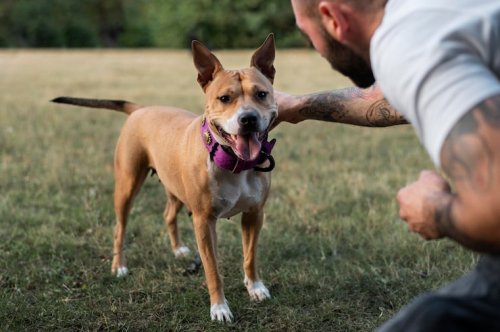
Dogs that bark at passing distractions, pull hard on leash, or lunge toward other dogs or people are not displaying “bad behavior” in isolation they are communicating emotional states that often stem from excitement, fear, or frustration. For many dog owners, especially those navigating busy urban walks, these behaviors can quickly turn routine outings into stressful experiences. Understanding what drives these reactions is the first step toward building calmer, more confident walks through structured, humane training approaches that prioritize learning over correction.
Your dog’s daily struggles pulling, mealtime anxiety, or reactivity don’t just cause stress, they chip away at the joy of being together. At Prime Paw, our positive reinforcement-based programs meet your dog where they are and build confidence, connection, and real skills. Our tailored programs in-person classes, coaching, and online resources help you enjoy calmer walks, relaxed routines, and a deeper connection. Ready for lasting change? Schedule a Prime Paw consultation today!
Understanding Barking, Pulling, and Lunging on Urban Walks
Leash-related behaviors like barking, pulling, and lunging often appear together because they share similar emotional roots. In stimulating environments, dogs may struggle to regulate their responses to movement, noise, and proximity to other dogs or people. Pulling forward can signal overexcitement or urgency to reach a stimulus, while barking and lunging may reflect frustration or uncertainty about how to respond.
Rather than viewing these behaviors as disobedience, modern training approaches focus on emotional regulation and communication. This shift is especially relevant in dense urban settings where triggers are frequent and unpredictable. Dogs are constantly learning from their environment, and every walk becomes a training opportunity whether intentional or not.
Why Leash Reactivity Happens in the First Place
Leash reactivity is commonly linked to fear, frustration, or insufficient early socialization. When a dog feels restrained by a leash, their natural responses to distance and movement can become intensified. Without guidance, these emotional spikes can escalate into barking, lunging, or persistent pulling.
Research highlights that dogs often benefit from structured exposure and reinforcement strategies that gradually reshape how they interpret triggers. Rather than reacting with tension, dogs learn to associate previously stressful stimuli with calm outcomes and rewards.
This approach aligns with findings that emphasize the importance of controlled exposure and emotional reshaping through reward-based learning, which supports long-term behavior change rather than temporary suppression of symptoms.
The Science Behind Positive Reinforcement Training
Modern behavior science strongly supports reward-based learning as a foundation for effective dog training. Instead of relying on punishment or aversive tools, positive reinforcement strengthens desired behaviors by rewarding calm responses, attention, and cooperation.
Modern research and applied training science consistently show that reward-based approaches significantly improve both learning outcomes and emotional wellbeing in dogs. As detailed in science-backed positive reinforcement training, methods that rely on treats, praise, and structured reinforcement help dogs learn desired behaviors more efficiently while also reducing stress-related indicators such as elevated cortisol. Dogs trained in this way tend to develop stronger resilience in stimulating environments, including crowded urban walks where distractions are frequent and unpredictable. The research also highlights that positive reinforcement not only improves obedience-based skills like loose-leash walking and recall but also enhances a dog’s overall confidence and problem-solving ability. In practical terms, this means dogs are better able to recover from arousing situations and redirect their attention toward their handler. Over time, these repeated positive associations create more stable behavioral patterns, reducing the likelihood of escalation into barking, lunging, or pulling. Importantly, this training framework shifts the human-dog relationship from one based on correction to one based on communication and collaboration, resulting in more consistent long-term behavior change.
Dogs trained through reinforcement-based methods also demonstrate stronger engagement with handlers, improved focus, and more consistent performance in everyday tasks. This creates a foundation where behaviors like loose-leash walking and calm observation of triggers become teachable, repeatable skills rather than constant struggles.
The broader implication is that training is not about control it is about communication. Dogs learn what works, and when calm behavior consistently produces positive outcomes, those behaviors become more reliable over time.
Counter-conditioning and Desensitization for Reactive Dogs
For dogs that bark, pull, or lunge in response to specific triggers, counter-conditioning and desensitization are essential tools. These methods work by changing the emotional association a dog has with a stimulus, gradually replacing stress or excitement with anticipation of positive outcomes.
Scientific reviews of humane training practices reinforce the effectiveness of these approaches. As discussed in research on humane dog training methods, counter-conditioning and desensitization allow dogs to be exposed to triggers at carefully controlled distances where they can remain calm and receptive to rewards. This gradual exposure process helps reshape the dog’s emotional response, shifting perception from threat or frustration toward neutrality or even positive anticipation. The research further emphasizes that aversive methods, such as punishment or force-based corrections, can increase fear responses and potentially worsen reactivity over time. In contrast, reward-based exposure builds emotional stability and encourages safer, more predictable behavior patterns. Professional veterinary behavior organizations widely support these methods, noting improved welfare outcomes and stronger long-term retention of learned behaviors. In real-world application, this means that dogs become more capable of encountering other dogs, people, or environmental triggers without escalating into barking or lunging, making urban walks significantly more manageable for both dog and handler.
Structured training programs use controlled exposure to triggers at a distance where the dog can remain calm. At that threshold, rewards are introduced to reinforce relaxed behavior. Over time, the dog begins to reinterpret the presence of other dogs, people, or environmental stimuli as non-threatening or even rewarding.
Evidence from research on humane dog training methods highlights that these approaches are widely endorsed by veterinary behavior professionals due to their effectiveness and reduced welfare risks. Unlike punishment-based methods, which can increase fear or aggression, reward-based strategies promote emotional stability and better long-term outcomes.
This gradual reshaping process is especially effective for leash reactivity, where dogs are physically constrained and more likely to feel trapped or overstimulated. By working below the threshold of reactivity, training builds confidence rather than conflict.
How Structured Training Supports Calm Walking Behavior
Effective leash training is not achieved through a single technique but through a consistent system of reinforcement, timing, and environmental management. Calm walking is built in layers starting with attention, progressing to leash awareness, and eventually integrating full behavioral control in stimulating environments.
One of the key principles is reinforcing voluntary focus. When a dog chooses to check in with their handler instead of reacting to distractions, that behavior is immediately rewarded. Over time, this creates a habit loop where attention becomes more valuable than external triggers.
Loose-leash walking is another foundational element. Rather than pulling forward to reach a destination, dogs learn that maintaining slack in the leash leads to forward movement and rewards. This reduces physical strain on walks and helps prevent escalation into reactive behaviors.
These structured methods align with evidence showing that dogs trained with reward-based systems develop stronger problem-solving abilities and improved behavioral flexibility, both of which are essential for navigating complex urban environments.
Applying Positive Training Principles in Urban Environments
Urban neighborhoods present a unique combination of stimuli tight sidewalks, frequent pedestrian traffic, other dogs, cyclists, and unpredictable sounds. These environments can intensify leash reactivity if dogs are not gradually conditioned to handle sensory input.
Training in such settings requires careful management of distance, timing, and reinforcement. For example, a dog that reacts to passing dogs may begin training at a distance where they can observe without escalating. Calm behavior is rewarded consistently, gradually reducing sensitivity over time.
Consistency is especially important in environments where triggers are unavoidable. Short, structured sessions during walks are often more effective than long, unstructured exposure. This helps prevent overstimulation while reinforcing positive habits in realistic conditions.
Owners also play a central role in shaping outcomes. Calm handling, predictable routines, and timely reinforcement contribute significantly to a dog’s ability to remain regulated during walks.
Building Long-term Confidence and Owner-dog Communication
Long-term success in managing barking, pulling, and lunging depends on more than behavior suppression it requires building confidence and trust between dog and handler. When dogs understand what is expected and consistently experience positive outcomes for appropriate behavior, their overall stress levels decrease and responsiveness improves.
Over time, this creates a feedback loop where calm behavior becomes self-reinforcing. Walks become less about managing reactions and more about shared exploration and communication. Dogs learn to rely on their handler for guidance in uncertain situations, while owners gain clearer insight into their dog’s emotional state.
Programs grounded in positive reinforcement and structured exposure offer a sustainable path forward for reactive behavior challenges. Rather than relying on correction, they focus on teaching alternative behaviors that are both practical and emotionally supportive.
For dog owners navigating busy urban environments, this approach transforms daily walks from high-stress interactions into opportunities for steady progress, improved understanding, and stronger companionship.
Frequently Asked Questions
Why does my dog bark, pull, or lunge on walks in urban environments?
Dogs often bark, pull, or lunge on walks due to underlying emotions such as excitement, fear, or frustration rather than simple disobedience. In busy urban environments, constant exposure to people, dogs, and noise can overwhelm a dog’s ability to stay calm and regulated. These behaviors are typically signs of leash reactivity triggered by overstimulation or uncertainty about how to respond.
How does positive reinforcement training help with leash reactivity and loose-leash walking?
Positive reinforcement training works by rewarding calm and desired behaviors, helping dogs learn what is expected without fear or punishment. This approach improves focus, reduces stress, and strengthens the bond between dog and handler. Over time, dogs become more reliable at loose-leash walking because staying calm and attentive leads to consistent rewards.
What is counter-conditioning and how can it help reactive dogs during walks?
Counter-conditioning changes a dog’s emotional response to triggers by pairing them with positive experiences such as treats or praise. When combined with desensitization, it helps dogs gradually become less reactive to stimuli like other dogs or pedestrians. This method supports long-term behavioral change by teaching dogs to associate previously stressful situations with calm and rewarding outcomes.
Disclaimer: The above helpful resources content contains personal opinions and experiences. The information provided is for general knowledge and does not constitute professional advice.
You may also be interested in: Dog Training in 2026 Focuses on Trust and Joyful Learning
Your dog’s daily struggles pulling, mealtime anxiety, or reactivity don’t just cause stress, they chip away at the joy of being together. At Prime Paw, our positive reinforcement-based programs meet your dog where they are and build confidence, connection, and real skills. Our tailored programs in-person classes, coaching, and online resources help you enjoy calmer walks, relaxed routines, and a deeper connection. Ready for lasting change? Schedule a Prime Paw consultation today!
Powered by flareAI.co