
Quick Listen:
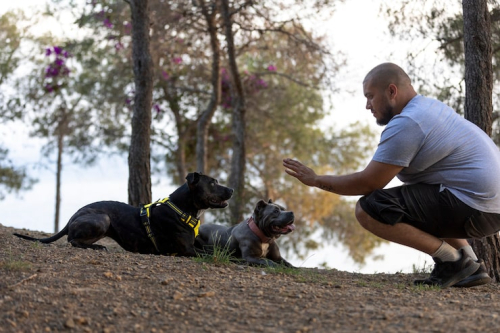
In the crowded sidewalks of San Francisco’s Mission District, a sudden bark or lunge can quickly escalate from minor annoyance to serious concern, especially when strollers, scooters, and pedestrians share every inch of space. Similar tensions play out in the packed elevators of SoMa towers and the lively dog runs of Noe Valley parks. In this dense urban environment, even subtle issues like leash reactivity or resource guarding demand proactive attention. Science-backed training grounded in positive reinforcement has emerged as a vital solution, enhancing canine welfare while safeguarding public safety.
Rooted in established learning theory and welfare research, this method prioritizes rewards, controlled exposure, and skill-building over aversive techniques or intimidation. As San Francisco’s shared spaces intensify everyday interactions, evidence-based approaches offer practical prevention and measurable improvements.
Your dog’s daily struggles pulling, mealtime anxiety, or reactivity don’t just cause stress, they chip away at the joy of being together. At Prime Paw, our positive reinforcement-based programs meet your dog where they are and build confidence, connection, and real skills. Our tailored programs in-person classes, coaching, and online resources help you enjoy calmer walks, relaxed routines, and a deeper connection. Ready for lasting change? Schedule a Prime Paw consultation today!
The Strength of Reward-Based Training
Decades of research demonstrate clear advantages for positive reinforcement. Dogs trained mainly through rewards show superior performance and fewer stress-linked problems than those subjected to heavy aversive tools, such as shock collars or prongs. Owners relying on punishment-based methods frequently report lower satisfaction with behaviors like leash walking, while positive techniques help reduce anxiety, aggression, and strains on the human-animal relationship.
A comprehensive study comparing training methods found that reward-focused groups achieved significantly better obedience such as faster, more reliable recall and sit responses with fewer commands needed overall. In contrast, methods incorporating aversives like electronic collars carried higher risks of negative affective changes, unintended associations, and welfare concerns, even when applied by experienced trainers. Reward-based training promotes genuine learning without unnecessary stress, fostering confidence and trust.
These benefits shine in San Francisco’s group environments, from daycares to playgroups. Reward protocols encourage safer interactions, dependable cues, and stable group behavior, reducing conflicts in close proximity.
Welfare indicators reinforce the case. Studies measuring physiological stress (cortisol) and behavioral cues (rest quality) show how positive handling and environmental adjustments dramatically lower tension. Temporary fostering in shelters, for instance, reduced cortisol and enabled longer rest, effects that reversed upon return to high-stress settings. San Francisco boarding, daycare, and shelter operators apply similar principles rest rotations, gentle interruptions to enhance well-being.
The result? Deeper owner bonds. Reduced problem behaviors build attachment, decreasing relinquishment risks and easing pressure on shelters.
Market Growth and Local Pressures
The demand for quality dog services reflects broader trends. The global dog services market, including training, was valued at USD 19.12 billion in 2024, projected to reach USD 29.37 billion by 2032 at a CAGR of 5.57%, with North America holding a 33.94% share in 2024. The wider pet services sector shows even stronger momentum, estimated at USD 60.08 billion in 2024 and expected to hit USD 125.77 billion by 2033 with an 8.58% CAGR, driven by rising disposable incomes and demand for personalized, premium offerings like customized training programs.
In the US, dog training services generated $287.5 million in 2025, with rising pet ownership poised to fuel future demand despite recent inconsistencies tied to economic factors.
Locally, challenges mount. Dog bite reports to San Francisco Animal Care and Control rose from 786 in 2018 to 868 in 2024 a 10% increase with 2025 projections exceeding 900, particularly sharp in the Tenderloin and Mission. The city’s Health Code requires immediate victim notification of owner details and rabies status, plus next-business-day reporting to SFACC, followed by investigations, quarantines (often 10 days), and potential high-risk interventions.
SFACC, the open-admission shelter, reported 2,750 dogs intake and 396 euthanized in Fiscal Year 2024-2025, achieving an 88% live release rate for dogs and cats combined. Euthanasia frequently results from severe medical conditions or unsafe behaviors, underscoring the need for early intervention.
Disease risks compound the urgency. Recent parvovirus spikes, nearly doubling in affected periods with clusters in dense areas like Tenderloin and SoMa, highlight the importance of controlled socialization and vaccinations.
Practical Applications Across Neighborhoods
Daycares in SoMa and Dogpatch implement reward-first systems: thorough intake evaluations, phased introductions, reinforced stationing, visual barriers, and scheduled breaks to curb escalation. Staff redirect behavior positively, avoiding force.
On narrow sidewalks in the Mission, Castro, or Noe Valley, desensitization/counterconditioning plans rewarding calm at increasing proximity yield tangible gains, such as expanded tolerance and quicker recovery.
Post-adoption from SFACC benefits immensely from decompression and positive routines in those vital early weeks, smoothing the transition to urban life.
Navigating Challenges
No method is universal. Diverse breeds, past trauma, or health factors require tailored strategies, and some providers misrepresent “positive” approaches while using coercive elements.
Urban density amplifies risks parks, elevators, sidewalks leave little margin for error. Lapses trigger rigorous bite protocols.
Businesses contend with staff consistency, turnover, and resource demands for individualized plans.
A Path to Stronger Outcomes
The advantages outweigh the hurdles. Standardized protocols, tracking, enrichment, and fit criteria lower incidents while distinguishing providers in a growing market. Rest-focused schedules reduce conflicts and improve satisfaction.
San Francisco’s emphasis on prevention and records aligns naturally with evidence-based systems.
By 2026, leading operators adopt written standards in learning theory, continuous education, regular assessments, built-in recovery time, and rule-compliant workflows.
As scrutiny on bites, capacity, and health persists, transparent, science-driven care will gain traction.
In a city as compact as San Francisco, positive, science-backed training transcends basic manners serving as an integrated strategy for welfare, safety, and sustainable business success.
Frequently Asked Questions
What is science-backed dog training and why is it more effective than traditional methods?
Science-backed dog training uses positive reinforcement techniques grounded in established learning theory and welfare research, prioritizing rewards and controlled exposure over aversive tools like shock collars or prong collars. Research shows that reward-based training produces significantly better obedience including faster recall and more reliable responses with fewer stress-related problems and stronger human-animal bonds. Dogs trained with positive methods demonstrate superior performance while avoiding the anxiety, aggression, and welfare concerns associated with punishment-based approaches.
How much has the demand for dog training services grown in recent years?
The global dog services market, including training, was valued at USD 19.12 billion in 2024 and is projected to reach USD 29.37 billion by 2032, growing at a CAGR of 5.57%. In the United States specifically, dog training services generated $287.5 million in 2025, with North America holding a 33.94% market share. This growth is driven by rising pet ownership, increased disposable incomes, and growing demand for personalized, premium training programs that prioritize animal welfare.
Why is positive reinforcement training especially important in urban environments like San Francisco?
In dense urban settings with crowded sidewalks, elevators, and dog parks, even minor behavioral issues like leash reactivity or resource guarding can quickly escalate into serious safety concerns. San Francisco has seen dog bite reports increase by 10% from 786 in 2018 to 868 in 2024, with projections exceeding 900 in 2025. Positive reinforcement training helps prevent these incidents through proven desensitization and counterconditioning techniques, while also addressing the city’s specific challenges like disease outbreaks (recent parvovirus spikes) and high shelter intake rates (2,750 dogs in FY 2024-2025).
Disclaimer: The above helpful resources content contains personal opinions and experiences. The information provided is for general knowledge and does not constitute professional advice.
You may also be interested in: Our Training Services
Your dog’s daily struggles pulling, mealtime anxiety, or reactivity don’t just cause stress, they chip away at the joy of being together. At Prime Paw, our positive reinforcement-based programs meet your dog where they are and build confidence, connection, and real skills. Our tailored programs in-person classes, coaching, and online resources help you enjoy calmer walks, relaxed routines, and a deeper connection. Ready for lasting change? Schedule a Prime Paw consultation today!
Powered by flareAI.co