
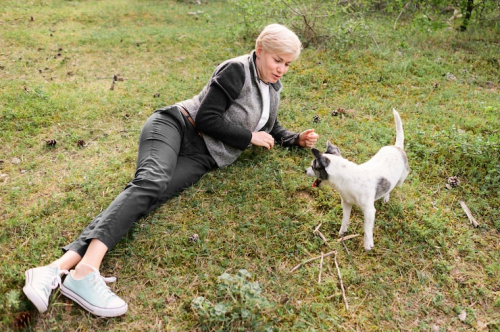
The notion that you can’t teach an old dog new tricks persists as a stubborn myth, yet everyday observations tell a different story: a senior Labrador’s eyes lighting up for a small piece of chicken, tail wagging as it masters a gentle “sit” once more. Older dogs often carry the accumulated wisdom and wear of years, with stiffer joints, softer hearing, and sometimes a quieter energy. Yet their brains remain plastic, ready to form new associations when approached with patience and positivity. Positive reinforcement training, which rewards desired behaviors rather than punishing mistakes, stands out as especially effective and humane for senior dogs, fostering learning without adding stress to already vulnerable companions.
Your dog’s daily struggles pulling, mealtime anxiety, or reactivity don’t just cause stress, they chip away at the joy of being together. At Prime Paw, our positive reinforcement-based programs meet your dog where they are and build confidence, connection, and real skills. Our tailored programs in-person classes, coaching, and online resources help you enjoy calmer walks, relaxed routines, and a deeper connection. Ready for lasting change? Schedule a Prime Paw consultation today!
Why Positive Reinforcement Excels with Senior Dogs
Positive reinforcement operates on a bedrock principle of behavioral science: actions followed by pleasant consequences are more likely to recur. As the American Kennel Club explains, it involves “rewarding your dog for the things they do right. The reward could be a toy, a game, or a treat – whatever your dog wants to work for.” This is not bribery but operant conditioning in action dogs learn through trial and error that certain choices yield good results. It contrasts sharply with aversive techniques like leash corrections, yelling, or prong collars, which introduce discomfort to suppress behaviors.
For older dogs, this gentle method offers clear advantages. Aging frequently introduces challenges such as arthritis that makes abrupt motions painful, reduced vision or hearing that can render sudden corrections startling or disorienting. Harsh approaches heighten stress precisely when dogs are least equipped to handle it. A key study from Porto, Portugal, published in PLOS ONE, examined dogs at six training schools divided by method: reward-only, mixed, and primarily aversive. Dogs in the aversive group showed more stress signals panting, yawning, lip-licking, tense postures and higher post-training cortisol levels than those in the reward group. They also appeared more pessimistic in a cognitive bias test, approaching ambiguous situations more cautiously. Reward-trained dogs displayed lower stress, greater relaxation or excitement, and more optimistic outlooks. The findings indicate that aversive methods, especially when dominant, compromise welfare both during sessions and beyond, while reward-based training supports calmer, more confident responses.
Senior dogs thrive under this low-pressure framework. Sessions stay short often five to ten minutes to match waning stamina, preventing fatigue or frustration. Trainers select soft, high-value rewards that suit aging teeth or slower appetites, such as tiny soft treats or brief play bursts. Shaping allows gradual progress: rewarding small approximations toward a behavior until the full action emerges naturally. This adaptability ensures the dog stays engaged and willing, building success upon success rather than fear of failure.
The global Dog Training Services market is expected to witness significant growth in the coming years, with rising disposable income and increasing pet adoption rates. The Dog Training Services Market is expected to grow from USD 13.2 Billion in 2023 to USD 37.3 Billion by 2031, at a CAGR of 7% during the forecast period.These reports provide detailed insights into market conditions, including key players, industry trends, competitive landscape, and customer preferences. Moreover, they analyze various factors influencing the market, such as technological advancements, changing lifestyles, and the growing awareness of pet health and wellness.
Protecting Emotional Well-Being in Later Years
Positive reinforcement quietly safeguards a senior dog’s emotional health. Years of life can include inconsistent past handling or rescues with lingering uncertainties; punishment risks amplifying caution or withdrawal. Rewards, conversely, cultivate optimism dogs begin linking their handler with positivity, reinforcing trust and eagerness to interact.
Consistency trumps intensity every time. Brief, daily practice yields steadier results than infrequent long sessions. Owners often see practical gains: reduced pulling on walks, calmer arrivals at the door, fewer reactive outbursts. The method flexes to preferences a chicken-motivated senior might ignore praise but leap for liver bits, while another perks up at a favorite squeaky toy. This individual tailoring keeps motivation high without force.
Broader industry shifts underscore the appeal of humane approaches. Demand for dog training services surges as owners prioritize wellness and stronger bonds. One analysis values the global market at USD 33.27 billion in 2024, projecting growth to USD 36.46 billion in 2025 and USD 75.92 billion by 2033, with a 9.6% CAGR from 2025 onward. Urbanization, evolving lifestyles, and recognition of emotional support roles drive this expansion. Formats range from private lessons and group classes to online courses, workshops, and board-and-train options, accommodating varied schedules while emphasizing relationship-building over dominance.
Countering Doubts with Evidence
Some owners hesitate, fearing rewards foster dependence or that seniors are too entrenched in habits. Long-term retention disproves dependency behaviors solidify when rewards fade to intermittent patterns, mirroring real-world motivation. Age proves no barrier; trainers routinely guide older dogs through obedience basics, impulse control, even enriching tricks that stimulate cognition and combat boredom.
Additional benefits surface physically and mentally. Regular positive sessions promote gentle activity that supports joint health and weight management without strain, while mental challenges sharpen focus akin to crosswords for aging humans. Purpose emerges, reducing issue behaviors tied to understimulation.
Ultimately, opting for reward-based training honors the rich history an older dog brings while opening doors to continued growth. It avoids the welfare costs tied to aversive tools elevated stress, eroded confidence and instead nurtures enthusiasm, security, and dependable conduct. In the golden years, this compassionate guidance transforms ordinary routines into shared victories, enriching the profound, wordless partnership that time alone can cultivate.
At PrimePaw, our approach centers on personalized training using positive reinforcement with seasoned trainers, blending structured guidance and secure socialization in supervised environments so dogs of every age can flourish with assurance.
Frequently Asked Questions
Can you really train an older dog using positive reinforcement?
Yes, older dogs can absolutely learn new behaviors through positive reinforcement training. Despite the myth that “you can’t teach an old dog new tricks,” senior dogs maintain brain plasticity and can form new associations when approached with patience. Reward-based methods are especially effective for aging dogs because they accommodate physical limitations like arthritis and reduced hearing while keeping training sessions stress-free and engaging.
Why is positive reinforcement better than other training methods for senior dogs?
Positive reinforcement is superior for older dogs because it avoids the stress and physical discomfort that aversive training methods can cause. Research shows that dogs trained with punishment-based techniques display higher cortisol levels, more stress signals, and pessimistic behaviors compared to reward-trained dogs. For seniors dealing with joint pain, reduced vision, or hearing loss, gentle reward-based training builds confidence and trust without adding harmful stress to already vulnerable companions.
What are the benefits of training an older dog with treats and rewards?
Training senior dogs with positive reinforcement offers both mental and physical benefits that support healthy aging. These short, reward-based sessions provide gentle activity that promotes joint health and weight management while stimulating cognition similar to mental exercises for aging humans. Additionally, consistent positive training strengthens the bond between dog and owner, reduces problem behaviors, and gives older dogs a sense of purpose that combats boredom and understimulation.
Disclaimer: The above helpful resources content contains personal opinions and experiences. The information provided is for general knowledge and does not constitute professional advice.
You may also be interested in: Our Training Services
Your dog’s daily struggles pulling, mealtime anxiety, or reactivity don’t just cause stress, they chip away at the joy of being together. At Prime Paw, our positive reinforcement-based programs meet your dog where they are and build confidence, connection, and real skills. Our tailored programs in-person classes, coaching, and online resources help you enjoy calmer walks, relaxed routines, and a deeper connection. Ready for lasting change? Schedule a Prime Paw consultation today!
Powered by flareAI.co