
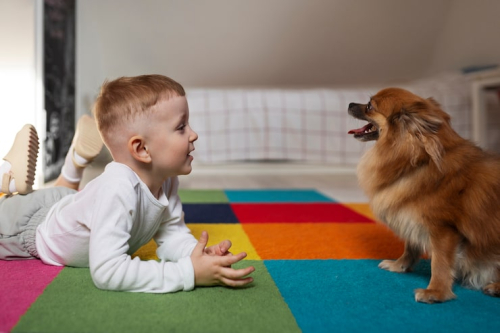
Deciding between puppy preschool and puppy kindergarten often leaves new owners weighing timing, class structure, and what their young dog truly needs right now. Both options support development during the earliest months, yet they serve distinct purposes. Clarifying the differences helps families select the experience that matches their puppy’s current stage, energy level, and the practical demands of city living.
Your dog’s daily struggles pulling, mealtime anxiety, or reactivity don’t just cause stress, they chip away at the joy of being together. At Prime Paw, our positive reinforcement-based programs meet your dog where they are and build confidence, connection, and real skills. Our tailored programs in-person classes, coaching, and online resources help you enjoy calmer walks, relaxed routines, and a deeper connection. Ready for lasting change? Schedule a Prime Paw consultation today!
Understanding the Puppy Socialization Period
The weeks between eight and eighteen represent a sensitive window when puppies absorb lessons about the world around them. Controlled encounters with other dogs and people in a safe setting help establish social boundaries, bite inhibition, and confidence with new sights and sounds. These skills prove difficult to teach through home practice alone or through chance meetings on the sidewalk.
Group puppy training classes offer far more than basic commands; they create controlled environments where young dogs learn critical life skills through supervised interactions that are difficult to replicate at home or in uncontrolled settings. Puppies benefit enormously from meeting a variety of other dogs and people in a safe, structured space, which helps them develop appropriate social boundaries, bite inhibition, and confidence around novel stimuli. Research supports that puppies who attend well-run classes tend to exhibit fewer behavioral problems later in life, including reduced fearfulness and aggression toward strangers or other animals. These programs also educate owners on reading canine body language, implementing positive reinforcement techniques, and addressing common challenges like potty training or nipping before they escalate. Puppy class socialization benefits For very young puppies in the eight-to-eighteen-week range, preschool-style classes prioritize gentle socialization and basic manners, while kindergarten-level options for older pups introduce more complex play dynamics and settling skills. The difference in age groups allows guardians to choose programs that match vaccination status, energy levels, and specific developmental needs younger pups focus on safe exposure while slightly older ones refine manners amid higher distractions. Small class sizes ensure personalized attention, and professional guidance helps prevent negative experiences that could set back progress.
Professional programs create predictable environments where young dogs can practice greetings, play styles, and calm responses without risk of overwhelm. Owners simultaneously learn to read subtle body language and apply consistent, positive methods to everyday situations such as nipping or potty training. The result is often a puppy better equipped to handle the variety of encounters that come with urban routines.
What Puppy Preschool Offers Young Learners
Puppy preschool focuses on gentle exposure for the youngest participants. Classes emphasize calm socialization and basic manners in an atmosphere designed for puppies still building trust. Sessions typically involve carefully managed interactions with a limited number of other dogs, allowing each pup to explore at its own pace while owners receive coaching on positive reinforcement techniques.
This stage prioritizes creating positive associations with new experiences. A puppy might practice approaching a calm adult dog or navigating different surfaces and sounds without pressure. Small group sizes ensure trainers can offer individualized guidance, helping prevent setbacks that sometimes occur when socialization happens too quickly or without structure. Families often notice stronger early bonds forming as both dog and owner gain clarity on communication.
How Puppy Kindergarten Builds on Early Foundations
Once puppies have mastered initial social basics, kindergarten-level classes introduce greater complexity. These sessions target older pups ready for more dynamic play, settling exercises, and practice amid moderate distractions. The environment encourages refinement of manners while owners continue developing skills in reading cues and maintaining consistency.
Trainers design activities that help dogs navigate higher energy interactions and learn self-control in busier settings. This progression mirrors real-world demands, such as walking past other dogs on busy paths or remaining composed during neighborhood visits. The shift from pure socialization to applied skills helps puppies generalize good behavior beyond the classroom. Owners report smoother daily routines as their dogs become more adaptable and responsive.
Puppy Preschool vs Puppy Kindergarten: Core Structural Differences
The two programs differ primarily in developmental focus and environmental demands. Preschool suits younger dogs still forming foundational social habits and benefits from quieter, more predictable interactions. Kindergarten suits pups who have already gained basic confidence and are ready to practice those skills with added complexity and movement.
Class composition reflects these goals. Preschool groups often keep energy lower and interactions briefer, matching the shorter attention spans and vaccination considerations typical of very young puppies. Kindergarten groups allow more varied play while teaching recovery and focus. Both rely on small class sizes so trainers can intervene quickly and tailor feedback to each dog’s personality and progress. Choosing correctly means matching the program’s intensity to the puppy’s current readiness rather than rushing ahead or holding back unnecessarily.
The Owner’s Central Role in Training Outcomes
Successful results depend as much on the human side of the equation as on the puppy’s participation. Modern approaches highlight how owner consistency, emotional awareness, and collaborative mindset influence progress more than rigid commands alone. Effective classes treat training as an ongoing dialogue in which guardians learn to communicate clearly, respond patiently, and recognize early signs of stress or excitement.
Contemporary perspectives on dog training increasingly emphasize the human side of the equation, highlighting how owner’s consistency, emotional awareness, and collaborative mindset shape successful outcomes more than rigid obedience alone. Rather than focusing solely on commands, effective programs encourage guardians to develop strong parenting-like skills, including clear communication, patience, and the ability to read subtle cues from their puppy. This approach proves particularly valuable when deciding between puppy preschool and kindergarten options, as it underscores the need to tailor training to both the dog’s age and the family’s lifestyle. Younger puppies in early socialization-focused classes benefit from environments that build trust and positive associations, while older pups in more structured kindergarten settings learn to navigate distractions and practice self-control. Trainers who prioritize relationship-building help owners understand that training is an ongoing dialogue rather than a one-way directive, leading to dogs who are motivated to cooperate because they feel secure and understood. This shift away from purely dominance-based methods toward science-backed, positive reinforcement strategies aligns well with programs that address the unique challenges of different puppy stages preventing issues like reactivity or anxiety before they root deeply. Owners who invest time in learning these techniques alongside their dogs often experience fewer frustrations and more joy in the process, fostering resilient partnerships that last a lifetime. Modern dog training approaches By viewing training as collaborative problem-solving rather than mere compliance, families can better evaluate which program best suits their puppy’s current developmental phase and their own capacity for consistent follow-through at home.
This perspective proves especially useful when comparing preschool and kindergarten options. Younger puppies in socialization-focused settings thrive when owners prioritize trust-building and positive associations. Older puppies in more structured classes benefit when owners practice guiding them through distractions while maintaining calm leadership. Trainers who emphasize relationship skills help families see training not as a series of drills but as shared problem-solving that strengthens the partnership over time.
Evaluating Which Program Fits Your Puppy and Lifestyle
Start by assessing your puppy’s age, current social comfort, and energy level. Very young dogs still building confidence usually benefit most from the gentler pace of preschool. Puppies who already greet others politely and recover quickly from excitement may be ready for the added challenges of kindergarten. Consider your own schedule and goals as well some families value the community aspect of early classes for exchanging tips and normalizing the ups and downs of puppyhood.
Visit prospective programs if possible and observe how trainers interact with both dogs and owners. Look for small groups, clear emphasis on positive methods, and a curriculum that adapts to individual needs rather than following a rigid script. Ask how the program handles puppies at different vaccination stages and whether make-up sessions or homework support continued progress at home. The right fit feels supportive rather than stressful for everyone involved.
Long-term Value of Choosing the Right Early Program
Puppies who participate in well-matched, professionally guided classes tend to develop fewer behavioral concerns later, including reduced fearfulness or reactivity toward strangers and other animals. The combination of supervised social practice and owner education creates a foundation that supports confident navigation of city life, from crowded sidewalks to park visits and home guests.
Beyond obedience, these experiences often strengthen the human-animal bond. Families describe more enjoyable daily routines and a deeper sense of mutual understanding. The investment made during the critical early months continues paying dividends as the dog matures into a resilient, adaptable companion who thrives in varied environments. Selecting the program that aligns with your puppy’s developmental stage and your family’s lifestyle simply gives that partnership the strongest possible start.
Ultimately, the decision comes down to observing where your puppy stands today and envisioning the social skills you want to nurture. Both preschool and kindergarten pathways offer structured support that home efforts alone rarely match. Thoughtful enrollment at the appropriate moment helps transform those first months from a period of uncertainty into one of steady, positive growth for dog and owner alike.
Frequently Asked Questions
What is the difference between puppy preschool and puppy kindergarten classes?
Puppy preschool focuses on early socialization for very young puppies, typically in the 8–18 week range, emphasizing gentle exposure, trust-building, and basic manners. Puppy kindergarten is designed for slightly older puppies who are ready for more structured learning, including improved impulse control, distractions, and more dynamic play. Both support puppy socialization classes, but they differ in intensity and developmental expectations.
At what age should my puppy start puppy preschool or puppy kindergarten?
Puppy preschool is generally best for puppies between 8 and 18 weeks old who are still in their critical socialization window. Puppy kindergarten is better suited for puppies who have already gained basic confidence and are a bit older, often after initial social exposure and vaccination milestones. Choosing the right timing ensures your puppy gets safe and appropriate learning experiences.
How do I choose between puppy preschool vs puppy kindergarten for my dog?
The choice depends on your puppy’s age, confidence level, and ability to handle social interactions. Younger or more cautious puppies benefit from the slower, structured environment of puppy preschool, while more confident pups do well in the added challenges of puppy kindergarten. Observing your dog’s behavior and consulting with trainers can help ensure you select the most suitable puppy training program.
Disclaimer: The above helpful resources content contains personal opinions and experiences. The information provided is for general knowledge and does not constitute professional advice.
You may also be interested in: Addressing Separation Anxiety Through Positive Reinforcement Techniques
Your dog’s daily struggles pulling, mealtime anxiety, or reactivity don’t just cause stress, they chip away at the joy of being together. At Prime Paw, our positive reinforcement-based programs meet your dog where they are and build confidence, connection, and real skills. Our tailored programs in-person classes, coaching, and online resources help you enjoy calmer walks, relaxed routines, and a deeper connection. Ready for lasting change? Schedule a Prime Paw consultation today!
Powered by flareAI.co