
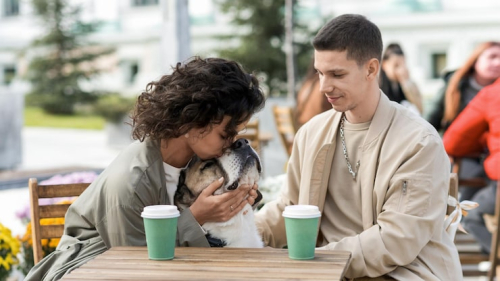
Early puppyhood is one of the most formative stages in a dog’s life, shaping how they respond to people, environments, and other animals for years to come. For new dog owners, especially those navigating busy urban living, structured early experiences like puppy social hours can play a decisive role in building confidence and reducing future behavioral challenges. These supervised sessions are not simply playtime they are carefully designed learning environments where young dogs begin to understand social cues, boundaries, and appropriate interaction.
Puppy social hours are structured group sessions where young dogs interact under supervision, typically guided by trainers who emphasize safe play and positive reinforcement. Unlike unstructured play at a park, these environments are intentionally designed to help puppies learn how to communicate with other dogs and respond appropriately to new stimuli.
In professional training settings, these sessions are considered a foundational element of early development. Research highlighted in puppy training classes research shows that puppies participating in structured group interactions are exposed to a wider variety of social situations, including different dog temperaments, human interactions, and environmental stimuli, compared to puppies raised without consistent social exposure. This variety helps young dogs develop adaptability and reduces the likelihood of fear-based reactions later in life. Puppies exposed to structured social environments show improved ability to interpret social cues from other dogs and humans. They also learn how to manage excitement, pause during play, and disengage when overwhelmed skills that translate directly into better behavior in everyday environments.
Owners who participate in these sessions also adopt more effective positive reinforcement techniques, rewarding good behavior and redirecting unwanted actions rather than relying on punishment, which further strengthens the human-dog bond and prevents fear-based responses. For businesses like PrimePaw serving new puppy guardians in urban settings, emphasizing these group social hours helps clients understand that early, controlled interactions are not just fun playtime but essential learning experiences that equip young dogs with the social skills needed for lifelong success. Puppies in these environments practice bite inhibition, appropriate play etiquette, and focus amid distractions, skills that translate to better manners at home, during walks, and in public spaces. The data underscores why prioritizing socialization in the first few months yields measurable benefits: fewer behavioral issues, stronger owner engagement, and dogs that thrive in diverse situations rather than reacting with fear or overwhelm. By integrating these insights, puppy owners can proactively support their dog’s learning trajectory, turning potential challenges into opportunities for growth and connection.
For first-time puppy owners, understanding that these sessions are not just recreational but developmental can shift how they approach early training. The goal is not simply to tire the puppy out, but to actively support emotional regulation, confidence building, and communication skills.
Your dog’s daily struggles pulling, mealtime anxiety, or reactivity don’t just cause stress, they chip away at the joy of being together. At Prime Paw, our positive reinforcement-based programs meet your dog where they are and build confidence, connection, and real skills. Our tailored programs in-person classes, coaching, and online resources help you enjoy calmer walks, relaxed routines, and a deeper connection. Ready for lasting change? Schedule a Prime Paw consultation today!
Understanding Puppy Social Hours as Early Learning Environments
Puppy social hours are structured group sessions where young dogs interact under supervision, typically guided by trainers who emphasize safe play and positive reinforcement. Unlike unstructured play at a park, these environments are intentionally designed to help puppies learn how to communicate with other dogs and respond appropriately to new stimuli.
In professional training settings, these sessions are considered a foundational element of early development. Research highlighted in puppy training classes research shows that puppies participating in structured group interactions are exposed to a wider variety of social situations, including different dog temperaments, human interactions, and environmental stimuli, compared to puppies raised without consistent social exposure. This variety helps young dogs develop adaptability and reduces the likelihood of fear-based reactions later in life. Puppies exposed to structured social environments show improved ability to interpret social cues from other dogs and humans. They also learn how to manage excitement, pause during play, and disengage when overwhelmed skills that translate directly into better behavior in everyday environments.
Owners who participate in these sessions also adopt more effective positive reinforcement techniques, rewarding good behavior and redirecting unwanted actions rather than relying on punishment, which further strengthens the human-dog bond and prevents fear-based responses. For businesses like PrimePaw serving new puppy guardians in urban settings, emphasizing these group social hours helps clients understand that early, controlled interactions are not just fun playtime but essential learning experiences that equip young dogs with the social skills needed for lifelong success. Puppies in these environments practice bite inhibition, appropriate play etiquette, and focus amid distractions, skills that translate to better manners at home, during walks, and in public spaces. The data underscores why prioritizing socialization in the first few months yields measurable benefits: fewer behavioral issues, stronger owner engagement, and dogs that thrive in diverse situations rather than reacting with fear or overwhelm. By integrating these insights, puppy owners can proactively support their dog’s learning trajectory, turning potential challenges into opportunities for growth and connection.
The Critical Early Development Window for Puppies
One of the most important aspects of early socialization is timing. Puppies go through a sensitive developmental window in which social learning is especially effective. During this period often identified as the first few months of life dogs are more receptive to new experiences and form long-lasting behavioral associations.
Veterinary guidance emphasizes that this early window plays a defining role in behavioral outcomes. According to veterinary socialization perspective, the key socialization period typically closes around 12–16 weeks of age. Within this timeframe, positive exposure to other dogs, people, and environments significantly reduces the likelihood of fear, aggression, and anxiety in adulthood. From a veterinary standpoint, the benefits of puppy social hours far outweigh minimal health risks when classes are well-managed, making them a cornerstone of preventive behavioral care for young dogs. Experts emphasize that the primary socialization window closes around 12-16 weeks, during which positive group interactions help puppies develop bite inhibition, appropriate social etiquette, and comfort with diverse stimuli, dramatically lowering the chances of fear, aggression, or anxiety in adulthood. Poorly socialized dogs face higher risks of relinquishment the top reason dogs enter shelters due to issues like fear-based reactivity or inability to cope with everyday environments.
Structured social hours in small, supervised groups provide safe exposure to other puppies and people, enabling guardians to observe body language, practice handling, and reinforce positive behaviors in real time. This not only builds the puppy’s confidence and learning capacity but also educates owners on realistic expectations and effective training, strengthening the pet-parent bond. For facilities like PrimePaw, offering dedicated Puppy Socials for under-vaccinated pups ensures accessibility while prioritizing safety through health protocols, cleaning standards, and professional oversight. Veterinary consensus, including positions from the American Veterinary Society of Animal Behavior, supports starting socialization early, as the risk of common diseases like parvovirus in controlled settings is low compared to the lifelong behavioral advantages. By facilitating these experiences, puppy owners proactively nurture resilient, sociable dogs better equipped to thrive in homes, neighborhoods, and beyond, reducing future stress for both pets and people.
Missing this window does not make training impossible, but it can make behavioral shaping more challenging later. Puppies that do not experience controlled, positive interactions during this phase may develop hesitation or overreactivity when faced with unfamiliar situations as adults.
How Puppy Socialization Classes Build Confidence and Reduce Anxiety
Confidence is one of the most important outcomes of early social learning. Puppies that regularly participate in structured group settings are more likely to develop calm, adaptable responses to new experiences.
Insights from puppy training classes research highlight that puppies exposed to structured social environments show improved ability to interpret social cues from other dogs and humans. They also learn how to manage excitement, pause during play, and disengage when overwhelmed skills that translate directly into better behavior in everyday environments. Puppies exposed to structured social environments show improved ability to interpret social cues from other dogs and humans. They also learn how to manage excitement, pause during play, and disengage when overwhelmed skills that translate directly into better behavior in everyday environments. Owners who participate in these sessions also adopt more effective positive reinforcement techniques, rewarding good behavior and redirecting unwanted actions rather than relying on punishment, which further strengthens the human-dog bond and prevents fear-based responses.
For businesses like PrimePaw serving new puppy guardians in urban settings, emphasizing these group social hours helps clients understand that early, controlled interactions are not just fun playtime but essential learning experiences that equip young dogs with the social skills needed for lifelong success. Puppies in these environments practice bite inhibition, appropriate play etiquette, and focus amid distractions, skills that translate to better manners at home, during walks, and in public spaces. The data underscores why prioritizing socialization in the first few months yields measurable benefits: fewer behavioral issues, stronger owner engagement, and dogs that thrive in diverse situations rather than reacting with fear or overwhelm. By integrating these insights, puppy owners can proactively support their dog’s learning trajectory, turning potential challenges into opportunities for growth and connection.
Another key benefit is the reduction of fear-based behavior. Puppies that are gradually introduced to new sounds, people, and environments in a controlled setting are less likely to develop long-term anxiety responses. This is particularly important for dogs raised in urban environments where stimulation is constant and varied.
Over time, these early experiences contribute to more stable behavior patterns, including reduced nervousness during walks, vet visits, and social interactions.
Learning Through Structured Play and Positive Reinforcement
One of the defining features of effective puppy social hours is the use of structured play combined with positive reinforcement techniques. Rather than allowing uncontrolled interaction, trainers guide puppies through moments of engagement, correction, and rest.
Owners also play a central role in this learning process. As highlighted in positive reinforcement training, guardians are encouraged to reward desirable behavior such as calm greetings, appropriate play biting, and focus during distractions. This reinforces learning through consistency rather than punishment-based methods.
This approach helps puppies develop bite inhibition and appropriate play etiquette. For example, when a puppy becomes overly excited during play, trainers can intervene and guide them toward calmer behavior, reinforcing the idea that gentleness and self-control lead to continued positive interaction.
Over time, this structured reinforcement helps puppies understand expectations in different environments, from home settings to public spaces.
Safety, Supervision, and Veterinary Perspectives
Safety is a common concern for new puppy owners considering group socialization. However, when properly managed, these environments are designed to minimize risk while maximizing developmental benefit.
Veterinary experts emphasize that well-run socialization programs prioritize hygiene, controlled group sizes, and careful monitoring of interactions. According to veterinary socialization perspective, the benefits of early social exposure in controlled environments outweigh the relatively low health risks when proper protocols are followed. From a veterinary standpoint, the benefits of puppy social hours far outweigh minimal health risks when classes are well-managed, making them a cornerstone of preventive behavioral care for young dogs. Experts emphasize that the primary socialization window closes around 12-16 weeks, during which positive group interactions help puppies develop bite inhibition, appropriate social etiquette, and comfort with diverse stimuli, dramatically lowering the chances of fear, aggression, or anxiety in adulthood. Poorly socialized dogs face higher risks of relinquishment the top reason dogs enter shelters due to issues like fear-based reactivity or inability to cope with everyday environments. Structured social hours in small, supervised groups provide safe exposure to other puppies and people, enabling guardians to observe body language, practice handling, and reinforce positive behaviors in real time.
This not only builds the puppy’s confidence and learning capacity but also educates owners on realistic expectations and effective training, strengthening the pet-parent bond. For facilities like PrimePaw, offering dedicated Puppy Socials for under-vaccinated pups ensures accessibility while prioritizing safety through health protocols, cleaning standards, and professional oversight. Veterinary consensus, including positions from the American Veterinary Society of Animal Behavior, supports starting socialization early, as the risk of common diseases like parvovirus in controlled settings is low compared to the lifelong behavioral advantages. By facilitating these experiences, puppy owners proactively nurture resilient, sociable dogs better equipped to thrive in homes, neighborhoods, and beyond, reducing future stress for both pets and people. Supervised environments allow trainers to intervene before interactions escalate, ensuring that puppies remain within safe emotional and physical boundaries. This structured oversight helps prevent negative experiences that could otherwise lead to long-term fear or reactivity.
Supervised environments allow trainers to intervene before interactions escalate, ensuring that puppies remain within safe emotional and physical boundaries. This structured oversight helps prevent negative experiences that could otherwise lead to long-term fear or reactivity.
For owners, these sessions also serve as educational opportunities. Observing professional trainers in real time helps them better understand canine body language, stress signals, and effective communication strategies.
Practical Considerations for New Puppy Owners
For those considering enrolling their puppy in socialization programs, consistency is more important than intensity. Regular exposure to controlled group environments helps reinforce learning without overwhelming the puppy.
It is also essential to complement group sessions with positive reinforcement at home. Puppies learn best when social experiences are reinforced through calm routines, predictable structure, and reward-based training methods.
Owners should also pay attention to their puppy’s comfort level. While some hesitation is normal, persistent signs of stress may indicate the need for shorter sessions or slower exposure progression. The goal is gradual confidence building, not forced interaction. When integrated properly, these experiences create a foundation for long-term behavioral stability and emotional resilience.
Long-term Benefits of Early Social Learning
The impact of puppy social hours extends far beyond early development. Dogs that receive structured social exposure are more likely to adapt successfully to new environments, people, and experiences throughout their lives.
They tend to exhibit fewer behavioral issues such as excessive fear, reactivity, or separation-related anxiety. This is because early social learning helps establish predictable behavioral patterns and strengthens the dog’s ability to interpret social cues accurately.
In everyday life, this translates into easier walks, calmer vet visits, and more positive interactions with other dogs and people. Owners also benefit from a stronger bond with their pets, as communication becomes clearer and more consistent over time.
Ultimately, early socialization is not just about behavior management it is about setting the foundation for a well-adjusted, confident companion capable of navigating a complex world with ease.
For new puppy owners, investing time in structured social experiences early on can make a lasting difference in both behavior and relationship quality, turning early curiosity into lifelong confidence.
Frequently Asked Questions
What are puppy social hours and how do puppy socialization classes help young dogs learn social skills?
Puppy social hours are structured, supervised group sessions where young dogs interact under the guidance of trained professionals. These puppy socialization classes focus on safe play, positive reinforcement, and teaching dogs how to read social cues. Unlike unstructured dog park play, they help puppies learn bite inhibition, boundaries, and appropriate interaction. This early learning builds stronger communication skills and better behavior in everyday environments.
When is the best time to start puppy socialization classes for optimal development?
The best time to start puppy socialization classes is during the critical early development window, typically between 12 and 16 weeks of age. During this period, puppies are especially receptive to new experiences and form long-lasting behavioral patterns. Early exposure to controlled social environments helps reduce fear, anxiety, and reactivity later in life. Starting within this window supports confident, well-adjusted adult dogs.
Are puppy socialization classes safe and what behavioral benefits do they provide?
Yes, well-run puppy socialization classes are considered safe when they include proper supervision, hygiene protocols, and controlled group sizes. Trainers closely monitor interactions to ensure puppies remain safe physically and emotionally while learning. These environments help reduce fear-based behavior, improve confidence, and support calmer responses to new situations. Over time, puppies show better behavior during walks, vet visits, and social interactions.
Disclaimer: The above helpful resources content contains personal opinions and experiences. The information provided is for general knowledge and does not constitute professional advice.
You may also be interested in: Early Puppy Socialization and Its Effects on Adult Behavior
Your dog’s daily struggles pulling, mealtime anxiety, or reactivity don’t just cause stress, they chip away at the joy of being together. At Prime Paw, our positive reinforcement-based programs meet your dog where they are and build confidence, connection, and real skills. Our tailored programs in-person classes, coaching, and online resources help you enjoy calmer walks, relaxed routines, and a deeper connection. Ready for lasting change? Schedule a Prime Paw consultation today!
Powered by flareAI.co