
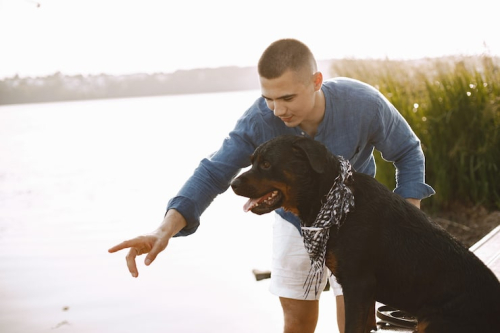
Picture this: a once-fierce rescue dog, hackles raised and growling at every passerby, transforms into a relaxed companion who greets the world with a wagging tail. This isn’t magic it’s the power of thoughtful training. In exploring The Role of Positive Reinforcement in Reducing Aggression in Dogs, we uncover how rewards over reprimands can reshape canine behavior, drawing on solid research and real-world insights.
Your dog’s daily struggles pulling, mealtime anxiety, or reactivity don’t just cause stress, they chip away at the joy of being together. At Prime Paw, our positive reinforcement-based programs meet your dog where they are and build confidence, connection, and real skills. Our tailored programs in-person classes, coaching, and online resources help you enjoy calmer walks, relaxed routines, and a deeper connection. Ready for lasting change? Schedule a Prime Paw consultation today!
The Fundamentals of Positive Reinforcement
As responsible pet owners, our duty extends to guiding our dogs toward behaviors that ensure their safety, joy, and seamless integration into society. This involves mental enrichment, nurturing our unique bonds, and allowing natural instincts to flourish while maintaining good manners. The encouraging news is that positive reinforcement training, endorsed by organizations like the RSPCA and veterinary experts, stands as the premier method both compassionate and potent for animal instruction. It entails promptly rewarding a dog with something desirable right after a wanted action, thereby boosting its recurrence. Crucially, this technique eschews any punishment. For instance, addressing an unwanted habit like exuberant jumping on guests involves redirecting rather than scolding.
At its core, positive reinforcement operates within the framework of operant conditioning, a psychological principle where behaviors are shaped by consequences. Rewards strengthen desired actions, while ignoring or redirecting undesired ones prevents reinforcement of problems. This contrasts sharply with aversive approaches, which rely on discomfort or fear to suppress behaviors. Research consistently demonstrates that such punitive methods can backfire, heightening stress and potentially exacerbating issues like aggression.
Why Aversive Methods Often Escalate Problems
Many dog owners turn to confrontational techniques such as prong collars, electronic shocks, or dominance assertions hoping for swift compliance. Yet, scientific evidence paints a concerning picture. Studies reveal that aversive-based training, which incorporates positive punishment (adding discomfort) or negative reinforcement (removing discomfort upon compliance), jeopardizes dog’s physical and emotional well-being. Dogs subjected to these methods exhibit elevated stress indicators, including lip licking, yawning, and tense postures during sessions. Moreover, post-training cortisol levels a marker of stress spike higher in these animals compared to those trained with rewards.pmc.ncbi.nlm.nih.gov
The fallout extends beyond immediate discomfort. Punishment may temporarily halt a behavior, like growling, but it fails to resolve underlying emotions such as fear or frustration. Suppressed signals can lead to sudden, intensified outbursts without warning. In fact, surveys of dog owners show that using punishing tactics correlates with higher reports of aggression toward family members and strangers. For example, techniques like hitting or kicking prompted aggressive responses in up to 43% of cases, while less invasive methods like staring down a dog elicited aggression in about 30%.oregonhumane.org
Further complicating matters, mixing punishment with rewards the so-called “balanced” approach yields the highest incidences of fear, aggression, and attention-seeking issues. This inconsistency confuses dogs, eroding trust and potentially fostering generalized anxiety or reactivity. Veterinary behaviorists warn that such methods can create negative associations not just with triggers but with owners or training itself, making future interventions harder.reddit.com
How Positive Reinforcement Directly Counters Aggression
Shifting focus to rewards, positive reinforcement addresses aggression by altering a dog’s emotional response to triggers. Common forms include resource guarding (protecting food or toys), fear-based snapping, or leash reactivity toward other dogs or people. Through counterconditioning, owners pair scary stimuli with high-value treats, transforming perceived threats into predictors of good outcomes. For a dog who guards its bowl, human approach signals treats arriving, dissipating defensiveness over time.beyondthedogtraining.com
Desensitization complements this by gradually exposing the dog to triggers at low intensities, rewarding calm. Short sessions build tolerance, reducing reactive explosions. Research supports this: dogs trained solely with positive methods report fewer behavior problems, including lower aggression and fear scores. In shelter settings, even brief positive reinforcement interventions show promise in curbing inter-dog reactivity, particularly among females.petsaloudveterinary.com
Beyond immediate fixes, this approach prevents issues proactively. Early socialization via puppy classes, emphasizing rewards, correlates with reduced aggression toward unfamiliar dogs later in life. It fosters resilience, teaching dogs that novel situations bring positives, not perils. Owners benefit too, gaining tools to manage behaviors without force, strengthening human-canine bonds.sciencedirect.competsaloudveterinary.com
Real-World Applications and Overcoming Myths
Critics often claim positive reinforcement won’t work for “hopeless” aggressive cases, but evidence counters this. Behavior consultants successfully employ reward-based strategies, even for severe aggression, by focusing on alternative behaviors like “watch me” or “sit” in triggering scenarios. Pairing aversive stimuli with rewards diminishes their threat, paving the way for operant learning without escalating conflicts.beyondthedogtraining.com
Structured programs amplify success. Environments offering supervised socialization allow safe practice of skills among peers, with trainers customizing plans to individual triggers and temperaments. This personalization, coupled with consistent rewards, accelerates progress while minimizing setbacks. Facilities like those emphasizing safe, expert-guided sessions turn reactive dogs into confident ones.
Addressing practical barriers, some hesitate due to perceived costs. However, the global dog training services market is booming, anticipated to expand from an estimated USD 43.8 billion in 2026 to USD 99.95 billion by 2035, at a compound annual growth rate of 9.6%. This surge reflects growing recognition of professional training’s value in enhancing pet behavior, obedience, and socialization, driven by heightened awareness among owners.
Similarly, the broader dog services market stood at USD 19.12 billion in 2024, forecasted to climb from USD 20.10 billion in 2025 to USD 29.37 billion by 2032, with a 5.57% CAGR. North America holds a dominant 33.94% share, underscoring the region’s high pet ownership and demand for quality services.
Skepticism about efficacy for tough cases persists, yet studies affirm positive methods excel by tackling root causes fear, anxiety rather than symptoms. Time constraints worry busy owners, but effective regimens feature brief, actionable sessions with homework that integrates seamlessly into daily routines, yielding results without overwhelming commitments.
PrimePaw in San Francisco exemplifies this, leveraging evidence-based positive reinforcement to aid dogs in surmounting reactivity, all while cultivating delight and rapport. Their tailored strategies, secure group interactions, and knowledgeable instructors convert uncertainty into assurance, reward by reward.
A Brighter Future for Dogs and Owners
Aggression signals deeper distress stress, fear, miscommunication that punishment merely magnifies. Positive reinforcement provides a gentler, mightier path: instructing via trust, not intimidation; honoring serenity over castigating turmoil. The rewards transcend mere compliance yielding secure dogs, empowered owners, and partnerships rooted in esteem, not apprehension.
Transformation demands time, steadfastness, and proper techniques, but it unfolds reliably. For dogs ensnared in reactivity loops, science unequivocally favors incentives over admonishments. The proof is robust, outcomes tangible, and solace for canines and their devoted humans immense. Embracing this method not only curbs aggression but elevates lives, one positive interaction at a time.
Frequently Asked Questions
Does positive reinforcement work for aggressive dogs?
Yes, positive reinforcement is highly effective for aggressive dogs, even in severe cases. This approach addresses the root emotional causes of aggression such as fear, anxiety, or frustration by using counterconditioning and desensitization techniques to change how dogs respond to triggers. Studies show that dogs trained with reward-based methods exhibit significantly lower aggression and fear scores compared to those trained with punitive approaches, making it both a safer and more successful long-term solution.
Why do aversive training methods make dog aggression worse?
Aversive methods like prong collars, shock devices, or physical corrections can actually escalate aggression rather than resolve it. Research reveals that punishment suppresses warning signals like growling without addressing underlying emotions, leading to sudden, unpredictable outbursts with up to 43% of dogs showing aggressive responses to hitting or kicking. These techniques elevate stress hormones, erode trust between dogs and owners, and create negative associations that can intensify fear-based reactivity and generalized anxiety over time.
How long does it take to reduce aggression using positive reinforcement training?
While transformation through positive reinforcement requires time, patience, and consistency, the results unfold reliably with proper techniques. The timeline varies based on the severity of aggression, the dog’s individual temperament, and the consistency of training, but many dogs show measurable progress through brief, actionable training sessions that integrate into daily routines. Professional trainers offering structured programs with customized plans can accelerate progress while maintaining safe, sustainable behavioral change that addresses root causes rather than just symptoms.
Disclaimer: The above helpful resources content contains personal opinions and experiences. The information provided is for general knowledge and does not constitute professional advice.
You may also be interested in: Our Training Services
Your dog’s daily struggles pulling, mealtime anxiety, or reactivity don’t just cause stress, they chip away at the joy of being together. At Prime Paw, our positive reinforcement-based programs meet your dog where they are and build confidence, connection, and real skills. Our tailored programs in-person classes, coaching, and online resources help you enjoy calmer walks, relaxed routines, and a deeper connection. Ready for lasting change? Schedule a Prime Paw consultation today!
Powered by flareAI.co