
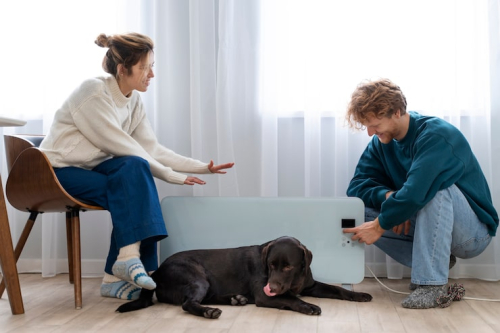
When a new puppy first arrives tail wagging, eyes bright with curiosity few responsibilities feel more urgent than ensuring they learn to feel secure even when you step out of sight. Separation anxiety remains one of the most common behavioral challenges new owners face, often transforming quiet homes into scenes of frantic barking, chewed belongings, and visible distress. Yet the vast majority of these difficulties can be prevented entirely. By introducing patient, reward-based training from the very beginning, you equip your puppy with the emotional tools to view alone time as safe, predictable, and even pleasant.
Your dog’s daily struggles pulling, mealtime anxiety, or reactivity don’t just cause stress, they chip away at the joy of being together. At Prime Paw, our positive reinforcement-based programs meet your dog where they are and build confidence, connection, and real skills. Our tailored programs in-person classes, coaching, and online resources help you enjoy calmer walks, relaxed routines, and a deeper connection. Ready for lasting change? Schedule a Prime Paw consultation today!
Recognizing True Separation Anxiety in Young Dogs
The signs frequently appear within moments of departure: high-pitched whining that begins the second you disappear from view, destructive chewing directed at doors or furniture, pacing, drooling, or in more severe instances attempts to escape confined areas. Puppies are particularly vulnerable during their socialization window (roughly 3–14 weeks, with the most critical learning occurring between 8–12 weeks) because this is when lifelong associations about safety and solitude take root. Without proactive, positive guidance, many puppies come to interpret being alone as a genuine threat.
Reward-based training changes that narrative at the source. Rather than waiting for anxious behavior to emerge and then attempting to suppress it, this approach builds confidence proactively by repeatedly linking short periods of independence with highly desirable outcomes tasty treats, favorite toys, cheerful praise until the puppy’s internal calculus begins to favor calm over panic.
The Clear Superiority of Positive Reinforcement
Traditional training styles that emphasize dominance, correction, or punishment frequently heighten fear and erode trust rather than resolve underlying insecurity. Positive reinforcement, by contrast, aligns perfectly with canine learning biology: behaviors that produce pleasant consequences are eagerly repeated.
Professional trainers and veterinary behaviorists widely observe that puppies raised with consistent reward-based methods develop lower baseline anxiety, greater problem-solving ability, and noticeably stronger attachments to their human families. The technique prioritizes mutual understanding over coercion an approach ideally suited to a young, impressionable mind still forming its view of the world.
Laying the Foundation: The Critical First Weeks (8–12 Weeks)
Meaningful prevention starts the day your puppy crosses your threshold. The cardinal rule is simple but non-negotiable: never allow distress to escalate during independence practice. Frequent, brief, successful exposures far outperform infrequent, lengthy sessions that risk overwhelming the puppy and reinforcing fear.
Designing a Positive Safe Haven
Select a crate, exercise pen, or small puppy-proofed room as your starting point. Furnish it with comfortable bedding, fresh water, and engaging, safe chew items. Before any alone-time training begins, invest time making the space feel rewarding: sit inside together, scatter treats, offer gentle play, allow free exploration. The association you want is sanctuary not confinement.
Never use the area for discipline. A place tied to punishment quickly becomes a location the puppy dreads rather than seeks.
Step-by-Step Alone-Time Conditioning
Build tolerance gradually through short, structured repetitions spread across each day:
- Provide a high-value, long-lasting occupation a stuffed Kong, frozen lick mat, or durable chew toy loaded with food.
- Place the puppy calmly in their prepared space, step just beyond the doorway or around a corner for 5–10 seconds, then return without fanfare.
- Immediately reward relaxed behavior upon your return (a treat dropped inside the space works particularly well).
- Very slowly extend duration 15 seconds, 30 seconds, 1 minute, 3 minutes, 5 minutes always retreating before any sign of anxiety appears.
Progress strictly at the puppy’s comfort level. Advancing too quickly is the single most common reason early efforts unravel.
Fostering Independence Even When You’re Present
Before practicing real absences, teach the puppy to self-soothe in your presence. Settle on the sofa with a book while the puppy chews a toy several feet away. Briefly ignore attention-seeking behavior, then quietly reward the instant they relax and occupy themselves.
Simultaneously desensitize everyday departure signals: pick up keys, lace shoes, open the front door then immediately sit down again and offer a treat for calm non-reaction. Repeated neutral pairings strip these triggers of their power to provoke alarm. Daily five- to ten-minute brain games basic obedience, scent work, food puzzles further tire an active mind and naturally reduce clingy tendencies.
Supportive Tools That Complement But Never Replace Training
Several practical aids can ease the process when used thoughtfully:
- Food-dispensing puzzles and stuffed toys turn alone time into a rewarding activity.
- Baby gates create gentle visual separation while preserving safety and connection.
- Calming audio soft classical music, white noise, or specially designed dog playlists can lower ambient stress.
- Pheromone diffusers sometimes help establish a more relaxed baseline (most effective when paired with structured behavioral work).
No tool substitutes for consistent, positive repetition. They are assistants, not solutions.
Frequent Pitfalls That Undermine Progress
Even the most devoted owners can unintentionally strengthen anxiety through everyday habits:
- Prolonged, emotional farewells and exuberant homecomings exaggerate the contrast between togetherness and separation.
- Comforting or soothing a distressed puppy during alone-time practice teaches that vocalizing or panicking brings closeness.
- Scolding destructive behavior after the fact confuses the dog and weakens the human-canine bond.
- Providing near-constant companionship in the first weeks creates an unrealistic benchmark that real absences then violate dramatically.
Steady, low-key consistency outperforms dramatic displays of affection every time.
Realistic Outcomes and When to Seek Professional Guidance
Puppies raised with methodical, reward-based independence training typically mature into composed, adaptable adults capable of handling hours alone without distress. The wider pet-care community increasingly recognizes this shift: growing numbers of owners seek out science-backed, positive-reinforcement programs to give their dogs the strongest possible emotional foundation.
Should your puppy display severe or persistent signs relentless vocalization, frantic escape behavior, complete refusal to eat or drink when alone consult a certified positive-reinforcement trainer or board-certified veterinary behaviorist promptly. Early, expert intervention almost invariably reverses the trajectory.
The time invested in those first formative months yields returns that last the dog’s entire life. You are not merely sidestepping problem behaviors; you are cultivating deep-seated security that allows your companion to thrive confidently, whether you are in the next room or miles away.
Frequently Asked Questions
What are the early signs of separation anxiety in puppies, and when should I start training?
Early signs include high-pitched whining, destructive chewing near doors, pacing, drooling, and attempts to escape when left alone. Training should begin the very first day your puppy comes home, ideally between 8–12 weeks the critical socialization window when lifelong associations about safety and solitude are formed. Starting early with short, positive independence exercises is far more effective than addressing anxiety after it develops.
How does reward-based training help prevent separation anxiety in puppies?
Reward-based training works by repeatedly pairing short periods of alone time with positive outcomes treats, favorite toys, and calm praise so your puppy learns to associate independence with safety rather than threat. Unlike dominance or correction-based methods, positive reinforcement aligns with how dogs naturally learn: behaviors that feel good get repeated. Puppies trained this way tend to develop lower baseline anxiety, stronger problem-solving skills, and more secure bonds with their owners.
How long should I leave my puppy alone during separation anxiety training?
Start with just 5–10 seconds stepping briefly out of sight before returning calmly then very gradually increase to 15 seconds, 30 seconds, 1 minute, and so on, always coming back *before* any anxiety appears. Rushing this progression is the most common reason training breaks down, so advance only at your puppy’s comfort level. Providing a high-value distraction like a stuffed Kong or frozen lick mat during these sessions helps your puppy build a positive association with alone time.
Disclaimer: The above helpful resources content contains personal opinions and experiences. The information provided is for general knowledge and does not constitute professional advice.
You may also be interested in: PrimePaw Homepage – Prime Paw
Your dog’s daily struggles pulling, mealtime anxiety, or reactivity don’t just cause stress, they chip away at the joy of being together. At Prime Paw, our positive reinforcement-based programs meet your dog where they are and build confidence, connection, and real skills. Our tailored programs in-person classes, coaching, and online resources help you enjoy calmer walks, relaxed routines, and a deeper connection. Ready for lasting change? Schedule a Prime Paw consultation today!
Powered by flareAI.co