
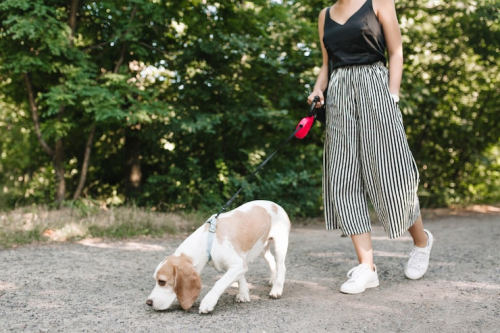
The global pet services industry, valued at approximately USD 60 billion in 2024 , underscores just how seriously modern owners take their animal’s quality of life. From professional grooming and boutique boarding to structured training sessions, people are increasingly investing in experiences that go beyond basic care. This shift reflects a deeper commitment: many now view their dogs not merely as pets, but as cherished family members deserving of comfort, enrichment, and thoughtful guidance including the everyday pleasure of relaxed, enjoyable walks together.
Nothing quite reveals the raw enthusiasm of a young puppy like that first real leash walk. You step outside full of anticipation, leash in hand, ready for bonding time in the fresh air. Within seconds the scene changes: your arm is suddenly extended forward, the leash taut as your pup rockets toward a leaf skittering across the sidewalk, a distant dog bark, or the irresistible aroma wafting from a neighbor’s trash bin. Loose-leash walking is far more than good manners. It is a practical skill that protects your puppy from darting into traffic, prevents chronic shoulder strain for you, and lays the foundation for mutual trust and calm companionship.
Your dog’s daily struggles pulling, mealtime anxiety, or reactivity don’t just cause stress, they chip away at the joy of being together. At Prime Paw, our positive reinforcement-based programs meet your dog where they are and build confidence, connection, and real skills. Our tailored programs in-person classes, coaching, and online resources help you enjoy calmer walks, relaxed routines, and a deeper connection. Ready for lasting change? Schedule a Prime Paw consultation today!
Understanding Why Puppies Pull and Why Early Training Pays Off
At its core, pulling is perfectly logical from a puppy’s perspective. The world is brand new and endlessly fascinating. Every scent trail, every rustling bush, every passing bicycle promises adventure. Moving forward feels inherently rewarding, so they lean into the collar or harness with determination. The problem arises when tension on the leash inadvertently reinforces that behavior: the harder they pull, the faster they move toward whatever has captured their attention.
Addressing this pattern early prevents it from becoming an ingrained, years-long habit. Consistent loose-leash practice teaches a puppy to check in with you, keeps outings enjoyable rather than exhausting, and dramatically reduces the risk of frustration-fueled reactivity later in life. When done with patience and positivity, the training process itself becomes a powerful relationship-building tool rather than a source of conflict.
Choosing Equipment That Supports Rather Than Sabotages Progress
Effective training starts with thoughtful gear selection. A properly fitted front-clip harness or no-pull head halter changes the mechanics of pulling: when the puppy surges forward, gentle pressure naturally redirects their body back toward you, making forward lunging far less productive. Standard flat collars can actually encourage pulling because they allow the dog to brace against pressure without discomfort.
During the learning phase, avoid retractable leashes entirely; the constant variable tension confuses most puppies and rewards inconsistent behavior. Opt instead for a durable four- to six-foot fixed-length leash that gives you reliable control while still permitting natural movement. Before ever leaving the house, introduce the harness and leash indoors. Let your puppy wear the harness during meals or play sessions, always pairing it with high-value treats so the equipment becomes associated with positive outcomes. Drag the leash gently across the floor during fetch games until your pup ignores it completely.
Building Attention and Loose-Leash Skills Indoors First
Distraction-free environments are the ideal starting point. Begin in a quiet living room or hallway where your puppy has already learned to settle.
Hold several small, high-value treats in your left hand (assuming you walk with the dog on your left). Say your puppy’s name in an upbeat tone. The instant their eyes meet yours, mark the behavior with a crisp “yes!” or click, then deliver a treat directly to their mouth. Repeat until eye contact is quick and reliable.
Now add motion. Place a treat near your leg at knee level and take one deliberate step forward. If the puppy stays close and the leash remains loose, reward lavishly. If they surge ahead, simply stop moving and wait. Do not pull back wait quietly until the leash slackens even slightly, then praise warmly and continue. Keep sessions brief five to ten minutes so enthusiasm stays high and fatigue never sets in.
Taking the Skill Outdoors: Introducing the “Let’s Go” Cue
Once loose positioning feels consistent indoors, transition to slightly more stimulating settings: a fenced backyard, a quiet cul-de-sac, or an empty parking lot early in the morning.
Introduce a cheerful verbal cue such as “Let’s go!” right before you begin walking. Take a few steps, reward every three or four strides if the leash stays slack. Should tension appear, halt immediately. The moment the leash loosens, offer enthusiastic praise and resume forward motion. This simple stop-and-wait method quickly teaches that pulling ends progress while polite walking restarts the journey.
To prevent the training from feeling overly rigid, incorporate short “off-duty” segments. Use a release phrase like “free time” or “go sniff” to allow controlled exploration as long as the leash remains relatively loose. These breaks honor a dog’s natural desire to investigate while reinforcing that freedom is a privilege earned through calm behavior.
Overcoming the Most Frequent Roadblocks
Breaking the Pull-and-Lunge Habit
Many puppies quickly learn that lunging propels them closer to exciting stimuli. A powerful counter-strategy is to change direction abruptly whenever you feel tension. Turn 180 degrees, walk the opposite way, and reward generously the instant your puppy turns with you and matches your pace. Frequent direction changes keep the puppy mentally engaged and teach that attentiveness to you is the fastest route to interesting places.
Managing Bursts of Over-Excitement
High arousal often fuels pulling. Before clipping on the leash, engage in a brief play session tug, fetch, or a quick round of obedience games to take the edge off nervous energy. A puppy that has already expended some enthusiasm is far more likely to focus during the walk itself.
Scaling Up Distance and Real-World Reliability
Gradually stretch the intervals between rewards. Begin with treats after every few steps, then every ten paces, then after half a block. Introduce real-life reinforcers: permission to greet a friendly neighbor, sniff an interesting patch of grass, or briefly investigate a fire hydrant provided the preceding stretch of walking was loose-leash. These natural rewards teach that calmness unlocks the best parts of the outing.
Balancing Tools, Techniques, and Household Consistency
Positive reinforcement strategic use of treats, cheerful praise, toy play, and access to interesting smells remains the most reliable and relationship-enhancing approach. Tools such as front-clip harnesses or gentle head halters serve as helpful mechanical aids, but they never replace deliberate training.
Steer clear of punitive methods yanking, leash pops, choke chains, or prong collars because they frequently increase anxiety, erode trust, or produce avoidance rather than genuine understanding. Equally important is consistency: every household member should apply the same rules and cues so the puppy receives clear, unambiguous feedback.
Setting Realistic Timelines and Celebrating Meaningful Progress
Every puppy learns at a different pace. Highly food-motivated, people-oriented breeds may show noticeable improvement within a few weeks, while independent or high-drive individuals often require several months of patient repetition. Focus on incremental victories: the first full block without pulling, the first time your puppy glances up at you voluntarily mid-walk, the first outing where tension never fully reappears.
Over time, those once-chaotic leash sessions evolve into peaceful, enjoyable rituals. Your puppy begins to walk attentively beside you, checks in regularly, and relaxes into the rhythm of shared movement. The payoff extends far beyond the walk itself: a dog that masters loose-leash skills is safer, more confident, and deeply connected to the person holding the other end of the leash.
Loose-leash walking is not an overnight achievement, but it is an eminently reachable one. With steady structure, abundant rewards, and genuine patience, you transform frantic pulling into calm, cooperative strolling one deliberate, rewarding step at a time.
Frequently Asked Questions
What is the best equipment for teaching a puppy to walk on a loose leash?
A front-clip harness or no-pull head halter is ideal for loose-leash training, as it gently redirects your puppy back toward you when they surge forward rather than letting them brace against pressure. Pair it with a fixed four- to six-foot leash avoid retractable leashes, which reward inconsistent behavior. Introduce the harness indoors during meals or play, pairing it with treats so your puppy builds a positive association before you ever head outside.
Why does my puppy keep pulling on the leash, and how do I stop it?
Puppies pull because the world is new and exciting moving forward feels naturally rewarding, and if pulling gets them closer to something interesting, the behavior gets reinforced. The most effective way to stop it is to halt immediately when the leash goes taut, wait for it to slacken, then resume walking. You can also change direction abruptly when you feel tension, rewarding your puppy generously when they turn with you, which teaches that staying attentive to you is the fastest way to reach fun destinations.
How long does it take to train a puppy to walk nicely on a leash?
The timeline varies depending on your puppy’s breed, temperament, and motivation food-driven, people-oriented dogs may show real improvement within a few weeks, while more independent or high-energy breeds can take several months of consistent practice. Short, five-to-ten-minute training sessions work best to keep enthusiasm high. Focus on small wins like the first full block without pulling or the first time your puppy voluntarily checks in with you mid-walk, as these signal that genuine progress is happening.
Disclaimer: The above helpful resources content contains personal opinions and experiences. The information provided is for general knowledge and does not constitute professional advice.
You may also be interested in: PrimePaw Homepage – Prime Paw
Your dog’s daily struggles pulling, mealtime anxiety, or reactivity don’t just cause stress, they chip away at the joy of being together. At Prime Paw, our positive reinforcement-based programs meet your dog where they are and build confidence, connection, and real skills. Our tailored programs in-person classes, coaching, and online resources help you enjoy calmer walks, relaxed routines, and a deeper connection. Ready for lasting change? Schedule a Prime Paw consultation today!
Powered by flareAI.co