
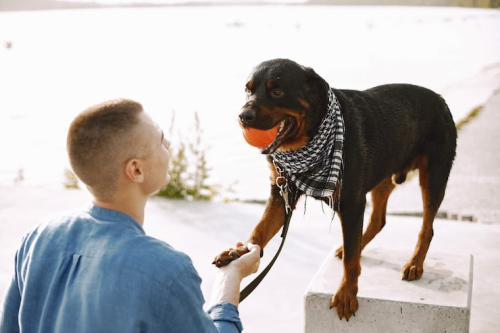
In San Francisco, where fog rolls in over steep streets and every block pulses with life, raising a puppy presents a special set of challenges. Skateboards clatter past, sirens wail without warning, and crowded sidewalks test even the most even-tempered young dog. Yet across neighborhoods from the Mission to Bernal Heights, a growing number of owners are discovering that reward-based puppy training offers a remarkably effective path forward. By focusing on positive reinforcement carefully timed treats, praise, and play these methods build confidence, strengthen bonds, and turn chaotic early months into cooperative, joyful years.
Your dog’s daily struggles pulling, mealtime anxiety, or reactivity don’t just cause stress, they chip away at the joy of being together. At Prime Paw, our positive reinforcement-based programs meet your dog where they are and build confidence, connection, and real skills. Our tailored programs in-person classes, coaching, and online resources help you enjoy calmer walks, relaxed routines, and a deeper connection. Ready for lasting change? Schedule a Prime Paw consultation today!
The Essence of Reward-Based Training
Reward-based training, frequently referred to as positive reinforcement, operates on a straightforward principle: behaviors that are rewarded tend to increase. Rather than correcting unwanted actions with physical pressure or harsh words, trainers mark the moment a puppy does something desirable sitting calmly, looking at the handler, walking without pulling and immediately follow with something the dog values, usually food or play. Scientific understanding and decades of practical application show that this approach lowers stress, reduces fear-based reactions, and fosters genuine enthusiasm for learning. In a city environment filled with unpredictable stimuli, the absence of punishment becomes especially valuable: it prevents the escalation of anxiety that can turn a curious puppy into a reactive adult.
Why San Francisco Demands a Thoughtful Approach
The city’s unique geography and density amplify the ordinary difficulties of puppyhood. Narrow sidewalks in the Castro force close encounters with strangers and other dogs. Sudden elevation changes in Potrero Hill demand steady focus on leash manners. Open spaces in Dogpatch and along the Embarcadero expose young dogs to bicycles, scooters, and crowds in rapid succession. Positive reinforcement programs that combine structured skill-building with carefully managed socialization allow puppies to practice essential behaviors in controlled settings before facing the full intensity of urban life. This dual focus training plus safe, supervised group interaction helps create adaptable, socially confident dogs suited to San Francisco living.
Case Example: Transforming Leash Pulling in SoMa
A young Labrador retriever adopted into a live-work loft near Oracle Park arrived full of enthusiasm but little impulse control. Every walk became a tug-of-war, with the puppy lunging toward every passing person, bike, and delivery cart. The chosen program emphasized incremental progress: initial sessions rewarded eye contact and loose-leash walking inside the apartment using very small, high-value treats. Within days the puppy began offering calm behavior voluntarily. The trainer then moved practice outside, starting in quiet alleys and gradually approaching busier streets. Each step without tension earned reinforcement; pulling earned an immediate pause and reset. By the eighth week, walks along the Embarcadero had shifted from exhausting battles to relaxed, cooperative outings. The owner later reflected that the most meaningful change was not the technical skill but the mutual trust that developed through consistent, cheerful communication.
Case Example: Building Confidence for a Fearful Rescue in Noe Valley
A small mixed-breed rescue brought to Noe Valley carried clear signs of past uncertainty: she shrank from sudden noises, avoided eye contact with strangers, and growled softly at approaching dogs. Force-based methods would likely have deepened her apprehension. Instead, the trainer began in a calm indoor space, using a clicker or verbal marker paired with premium treats to reward any voluntary approach toward novel objects or people. Over successive supervised group sessions, the puppy encountered age- and size-matched companions in a controlled environment. Positive interactions short play bouts, shared treats, gentle greetings were heavily reinforced while trainers prevented overwhelming encounters. After ten weeks she trotted through neighborhood streets with a relaxed tail and soft expression, willingly approaching familiar faces for attention. The combination of personalized positive reinforcement and structured socialization had rewritten her emotional response to the world around her.
Case Example: Focus and Manners for a High-Drive Pup in Dogpatch
In the industrial-edged streets of Dogpatch, a border collie mix joined an active household whose members worked long hours. The puppy’s intelligence and drive quickly turned into constant pulling, jumping on visitors, and difficulty settling indoors. Training began with short, frequent sessions that rewarded calm mat behavior and polite door greetings. Impulse-control exercises waiting before exiting doorways, pausing at curbs were introduced early and reinforced generously. Leash walking progressed from hallway practice to backyard drills and finally to real-world routes near the bay. The trainer incorporated the puppy’s natural play drive, using tug toys as rewards for correct choices. Within two months the once-frantic dog had learned to offer calm focus during walks and relax in the apartment even when guests arrived. The family particularly valued how the program’s flexibility accommodated their schedule: brief, high-quality sessions delivered better long-term results than extended weekly classes.
Responding to Common Hesitations
Prospective clients often raise three practical concerns. First, the perceived cost especially when balanced against food, veterinary care, and other essentials. Second, skepticism about whether purely positive methods can address strong-willed, high-energy, or anxious puppies. Third, the challenge of carving out consistent time in a fast-moving city. Real-world outcomes in San Francisco repeatedly demonstrate that personalization addresses all three. Tailored exercises fit individual temperaments and household routines, often including short daily sessions and video guidance that reduce the need for lengthy in-person commitments. Many owners discover that visible progress within the first few weeks less stress on walks, calmer home behavior makes the investment feel both reasonable and rewarding. The efficiency of well-designed positive reinforcement frequently produces faster, more lasting change than punitive approaches that can create side effects requiring additional time and expense to resolve.
The Advantage of Integrated Training and Socialization
Programs that deliver both skill instruction and controlled group socialization under one roof hold particular value in dense urban settings. Experienced trainers supervise every moment, ensuring that puppies rehearse desirable behaviors and form positive associations before encountering the city’s full complexity. This integrated model accelerates learning, minimizes rehearsal of problem behaviors, and equips owners with clear, practical strategies they can apply independently long after formal sessions conclude.
A Lasting Partnership in a Vibrant City
From the sunlit staircases of Bernal Heights to the lively corners of the Mission, reward-based puppy training is quietly reshaping what life with a young dog can look like in San Francisco. Frustration gives way to understanding, uncertainty to confidence, and disconnection to shared delight. Puppies who once overwhelmed their households now stride beside their people with loose leashes and attentive eyes, prepared for whatever the next block brings. For owners willing to commit to thoughtful, evidence-informed methods, the result is far more than obedience: it is a genuine partnership built on mutual respect and joy one that makes every neighborhood feel a little warmer and every walk a little brighter.
Frequently Asked Questions
What is reward-based puppy training and how does it work?
Reward-based puppy training, also known as positive reinforcement, works by rewarding desirable behaviors such as sitting calmly or walking without pulling with treats, praise, or play, immediately after they occur. Because rewarded behaviors tend to increase, puppies learn quickly without the stress or anxiety that punishment-based methods can cause. This approach is especially effective in busy urban environments like San Francisco, where unpredictable stimuli can otherwise trigger fear and reactivity in young dogs.
Is positive reinforcement training effective for anxious, fearful, or high-energy puppies in San Francisco?
Yes positive reinforcement is particularly well-suited for puppies with fearful, anxious, or high-drive temperaments. Real-world case examples from San Francisco neighborhoods like Noe Valley and Dogpatch show that tailored reward-based programs can transform fearful rescues into socially confident dogs and redirect a high-energy border collie mix’s drive into calm, focused behavior. The key is personalization: exercises are adapted to each puppy’s temperament and the household’s schedule, often producing faster and more lasting results than punitive approaches.
How long does reward-based puppy training take to show results in a city environment like San Francisco?
Many owners begin noticing meaningful improvements such as calmer leash behavior and reduced anxiety within the first few weeks of consistent training. Case examples from SoMa and Dogpatch show puppies making significant progress within eight to ten weeks, moving from chaotic walks to relaxed, cooperative outings. Short, frequent daily sessions combined with structured socialization in controlled settings tend to accelerate results, making the approach practical even for busy San Francisco residents.
Disclaimer: The above helpful resources content contains personal opinions and experiences. The information provided is for general knowledge and does not constitute professional advice.
You may also be interested in: PrimePaw Homepage – Prime Paw
Your dog’s daily struggles pulling, mealtime anxiety, or reactivity don’t just cause stress, they chip away at the joy of being together. At Prime Paw, our positive reinforcement-based programs meet your dog where they are and build confidence, connection, and real skills. Our tailored programs in-person classes, coaching, and online resources help you enjoy calmer walks, relaxed routines, and a deeper connection. Ready for lasting change? Schedule a Prime Paw consultation today!
Powered by flareAI.co