
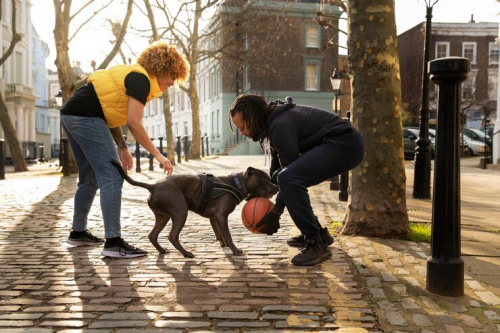
The moment you open your apartment door and guide a wide-eyed puppy onto a bustling New York sidewalk can feel like stepping into chaos. Sirens wail in the distance, delivery bikes weave through pedestrians, taxis honk, and heels click rapidly past. Your tiny companion may plant all four paws, ears flattened, refusing to move. Many new city dog owners have stood in exactly that spot, heart racing, wondering how to turn terror into confidence. The good news is that with a deliberate, step-by-step plan you can transform those overwhelming first walks into building blocks for a calm, adaptable adult dog.
Introducing a puppy to busy urban streets safely requires far more than patience it demands strategy. Done thoughtfully, the process strengthens your bond, prevents future reactivity, and allows both of you to enjoy city life rather than merely survive it.
Your dog’s daily struggles pulling, mealtime anxiety, or reactivity don’t just cause stress, they chip away at the joy of being together. At Prime Paw, our positive reinforcement-based programs meet your dog where they are and build confidence, connection, and real skills. Our tailored programs in-person classes, coaching, and online resources help you enjoy calmer walks, relaxed routines, and a deeper connection. Ready for lasting change? Schedule a Prime Paw consultation today!
Understanding the Urban Sensory Challenge
City environments bombard a developing nervous system with stimuli that rural or suburban puppies rarely encounter at such intensity. Sudden braking buses, rolling garbage bins, crowds surging at crosswalks, and unpredictable movements from scooters and skateboards create genuine overload for most eight- to sixteen-week-old puppies. This critical socialization period shapes lifelong emotional responses. Positive, controlled exposures during these weeks build resilience; rushed or negative experiences can produce lasting fear or aggression toward urban triggers.
The goal is never to flood the puppy with stimuli but to present manageable doses paired with abundant rewards so the brain learns that city sounds, sights, and motions predict good things rather than danger.
Building a Strong Foundation Indoors
Meaningful street progress begins long before you reach the sidewalk. Start in the safety of your home or hallway by establishing core skills that will anchor your puppy when the world becomes noisy.
Teach a high-value “watch me” cue: hold a treat near your eyes and mark the instant your puppy makes eye contact. Practice loose-leash walking along quiet corridors, rewarding every few steps of slack leash. Play low-volume recordings of city sounds traffic, horns, construction during meals so those noises become associated with pleasure instead of alarm. Keep sessions brief (three to five minutes), end on a positive note, and repeat multiple times daily. A puppy that already orients to you and walks politely indoors arrives at the front door far better prepared.
Strategic Timing and Smart Route Selection
Never begin in the middle of rush hour. Early mornings (before 7 a.m.) and late evenings (after 9 p.m.) offer thinner crowds and slower traffic ideal conditions for initial outings. Select the quietest block near your building: a residential street with parked cars providing visual barriers and minimal foot traffic.
The very first “walk” may consist of nothing more than standing on the stoop or sidewalk for sixty to ninety seconds while you feed treats for calm observation. Subsequent outings add only ten or twenty steps farther each time. Advance distance and complexity solely when your puppy displays relaxed posture: soft mouth, gently wagging or neutral tail, steady breathing, and voluntary exploration. Signs of stress tucked tail, pinned ears, freezing, or frantic pulling signal an immediate U-turn and a shorter, successful experience next time.
The Progressive Exposure Ladder
View urban desensitization as a clearly defined progression:
- Level 1: Stand just outside your building entrance during quiet hours, rewarding calm watching.
- Level 2: Walk half a block along a low-traffic residential street.
- Level 3: Pause at a corner and observe passing cars and pedestrians from ten to fifteen feet away.
- Level 4: Cross one quiet intersection together.
- Level 5: Travel one full block on a moderately busy sidewalk.
- Level 6: Navigate short segments near bus stops or construction zones.
At every stage, toss high-value treats onto the pavement to encourage natural foraging behavior sniffing lowers heart rate and shifts focus from fear to curiosity. If hesitation appears, crouch low, place treats in a trail forward, and let voluntary steps earn celebration. Never pull or push; progress happens at the puppy’s pace.
Core Commands for City Survival
Four reliable behaviors serve as safety anchors on urban walks:
- Sit automatic at every curb to prevent darting into traffic.
- Leave it instant disengagement from food scraps, broken glass, or other sidewalk hazards.
- Focus / watch me quick reorientation to you when another dog, cyclist, or child approaches.
- Let’s go cheerful forward cue that keeps momentum without leash tension.
Introduce and proof each command first in distraction-free settings, then gradually layer them onto real street walks. Use generous rewards early; slowly thin reinforcement so the behavior persists even when treats are occasional.
Choosing Equipment That Helps Rather Than Hinders
Well-selected gear supports calm movement instead of creating additional tension. Opt for a front-clip or no-pull harness that redirects forward momentum without neck pressure. Pair it with a standard four- to six-foot leash long enough for natural exploration yet short enough to maintain control near sudden obstacles. Reflective stitching or a high-visibility vest ensures safety during dawn and dusk walks. Always carry fresh water, poop bags, and a small treat pouch; being prepared reduces your own stress, which the puppy reads instantly.
Steer clear of retractable leashes in dense urban areas they allow too much distance and offer poor control when quick reactions are essential.
Recognizing When Professional Help Accelerates Progress
Most puppies advance steadily with consistent owner effort, yet some require expert guidance to overcome specific sensitivities. If after two to three weeks of careful exposure your puppy still panics at sirens, lunges at passing joggers, or shows increasing rather than decreasing fear, a qualified positive-reinforcement trainer can make a dramatic difference. Urban dog owners increasingly turn to professionals for precisely these city-specific challenges. A skilled trainer can evaluate your actual neighborhood routes, design customized counter-conditioning protocols, and teach you to recognize early stress signals before they escalate into bigger problems. Group classes held in city parks or private sessions targeting metropolitan skills frequently produce noticeable improvement within weeks.
Avoiding the Most Common Pitfalls
Well-intentioned mistakes often slow or reverse progress. The biggest error is attempting a long downtown adventure too soon overexposure creates setbacks that take days or weeks to repair. Harsh corrections, scolding, or tight-leash yanking when a puppy freezes only deepen fear. Inconsistent schedules confuse young dogs; puppies learn best from predictable routines. Finally, your own anxiety transmits through a rigid grip and hurried pace. Consciously relax your shoulders, loosen the leash, and breathe slowly your calm becomes the puppy’s most powerful reassurance.
The Long-Term Rewards of Thoughtful Socialization
A puppy who masters busy urban streets grows into an adaptable, confident companion. Spontaneous weekend outings, visits to outdoor cafés, rides on public transit, and moves to new apartments all become ordinary rather than stressful. Most importantly, every successful walk deepens mutual trust. You become the reliable constant amid unpredictable surroundings, and your dog learns that noisy, fast-moving environments ultimately lead to safety and good things. Those small, careful victories accumulated over weeks create a lifetime of relaxed companionship no matter how loud or crowded the city becomes.
The urban landscape will never stop being intense. But a puppy introduced properly doesn’t merely cope; it thrives. With structure, patience, and celebration of incremental gains, the once-daunting sidewalk transforms into familiar territory and the two of you walk through it together with ease.
Frequently Asked Questions
At what age should I start introducing my puppy to busy city streets?
The ideal window is during the critical socialization period between 8 and 16 weeks of age, when positive exposures have the greatest impact on lifelong emotional responses. Start with very brief, low-stimulation outings even just standing outside your building for 60–90 seconds before gradually increasing distance and complexity. Beginning during this period helps build resilience and prevents fear or reactivity toward urban triggers later in life.
How do I know if my puppy is too stressed to continue a city walk?
Watch for stress signals like a tucked tail, pinned ears, freezing in place, or frantic pulling these are clear signs your puppy has hit their limit. When you spot these behaviors, turn around immediately and end the outing on a shorter, calmer note rather than pushing through. Progress should only happen when your puppy shows relaxed body language: a soft mouth, gentle or neutral tail, steady breathing, and voluntary exploration.
What gear is best for walking a puppy on busy urban streets?
A front-clip or no-pull harness paired with a standard 4-to-6-foot leash is the recommended setup, as it redirects forward momentum without putting pressure on the neck. Avoid retractable leashes in dense city areas, since they offer poor control when quick reactions are needed. Reflective stitching or a high-visibility vest adds an extra layer of safety during dawn and dusk walks, and always carry water, poop bags, and a treat pouch to stay prepared.
Disclaimer: The above helpful resources content contains personal opinions and experiences. The information provided is for general knowledge and does not constitute professional advice.
You may also be interested in: PrimePaw Homepage – Prime Paw
Your dog’s daily struggles pulling, mealtime anxiety, or reactivity don’t just cause stress, they chip away at the joy of being together. At Prime Paw, our positive reinforcement-based programs meet your dog where they are and build confidence, connection, and real skills. Our tailored programs in-person classes, coaching, and online resources help you enjoy calmer walks, relaxed routines, and a deeper connection. Ready for lasting change? Schedule a Prime Paw consultation today!
Powered by flareAI.co