
Quick Listen:
Coming home after a demanding day should bring a sense of calm and reconnection. For countless dog owners, however, the moment the key turns in the lock unleashes a storm of leaping paws, joyful yelps, and the very real risk of scratches or stumbles. That enthusiastic puppy jump, once charming, quickly becomes a habit that demands attention for the safety of family members, the comfort of guests, and the long-term well-being of the dog itself. Practical solutions for better manners go far beyond quick fixes; they foster a relationship built on mutual respect and clearer communication.
Your dog’s daily struggles pulling, mealtime anxiety, or reactivity don’t just cause stress, they chip away at the joy of being together. At Prime Paw, our positive reinforcement-based programs meet your dog where they are and build confidence, connection, and real skills. Our tailored programs in-person classes, coaching, and online resources help you enjoy calmer walks, relaxed routines, and a deeper connection. Ready for lasting change? Schedule a Prime Paw consultation today!
Understanding the Roots of Jumping Behavior
Puppies jump for deeply instinctive reasons that trace back to their earliest interactions. In the wild, young dogs reach upward to greet pack members, seeking affection, food, or reassurance through face-licking gestures. Domestic life simply redirects this natural impulse toward the taller humans they love most. The behavior also brings them closer to hands, faces, and the attention they desperately crave, especially after time apart or during moments of high excitement like the arrival of visitors or the sound of a treat bag.
Breed tendencies and age play significant roles. Energetic herding breeds and lively terriers often jump more vigorously than calmer companions, with the habit typically strongest between six months and two years as puppies explore boundaries and discover what earns rewards. Importantly, jumping seldom signals dominance or defiance. It is simply a puppy expressing itself in the only language it knows, awaiting guidance toward a more appropriate alternative.
The Practical and Safety Challenges of Unchecked Jumping
What starts as an endearing greeting can escalate into everyday frustration and genuine hazards. A small puppy’s leaps may leave only muddy streaks on clothing, but as the dog matures, those same jumps can knock a child off balance or cause an older adult to lose footing. Scratches appear on skin, garments snag, and visitors begin to approach the door with hesitation. In active households, the disorder compounds balancing groceries, children, or packages while fending off enthusiastic bounds becomes exhausting.
Beyond surface-level annoyances lie deeper safety concerns. Uncontrolled jumping during greetings or play raises the likelihood of accidental injuries, joint strain for the growing dog, or falls that require medical care. The behavior also erodes household peace, transforming happy reunions into tense negotiations and complicating routine tasks like answering the doorbell. Addressing the issue early prevents it from becoming an entrenched pattern that affects everyone’s quality of life.
Immediate Techniques for Discouraging the Leap
One of the most effective starting points involves deliberate non-reaction. As soon as the puppy’s front paws lift off the ground, turn your body away, cross your arms, and withhold all attention no eye contact, no speaking, no touching. Remain still until all four paws rest solidly on the floor and the dog maintains that position for several seconds. Only then deliver calm praise and a modest reward. The puppy soon grasps that jumping yields nothing, while grounded calm earns everything desirable.
Consistency across all household members and visitors proves essential. A single person rewarding the jump undoes collective progress. Incorporate the routine during everyday low-pressure moments before feeding, at the beginning of play, or during short practice sessions so the new expectation becomes familiar through frequent, gentle repetition rather than sporadic enforcement during chaotic arrivals.
Building a Strong Alternative: Teaching the Sit
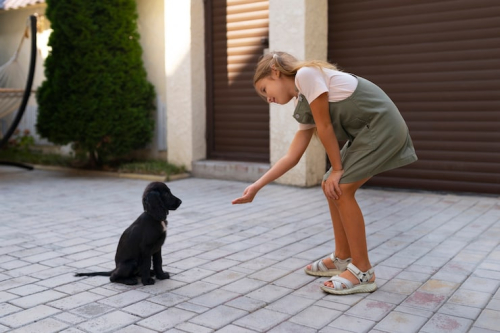
Replacing the unwanted behavior with a positive, incompatible action speeds results dramatically. The simple “sit” command serves as the cornerstone. Practice first in quiet spaces with minimal distractions: cue the sit, wait for compliance, then reward generously with treats, gentle petting, or a favored toy. Once reliable, weave the cue into real scenarios before opening the front door, prior to greeting returning family, or whenever attention is about to be offered.
Many trainers introduce a soft verbal marker such as “off,” delivered in a steady, low tone the instant jumping begins, followed instantly by warm praise the moment the dog returns to all fours. Avoid loud reprimands or physical corrections, which can heighten the very arousal you aim to reduce. Positive reinforcement strengthens confidence and trust, transforming training sessions into engaging, mutually rewarding interactions.
Handling High-Energy Moments and Visitor Greetings
Preparation minimizes chaos when excitement peaks. Position a leash near the entrance for gentle guidance during arrivals. A baby gate or brief tether provides breathing space until the initial surge subsides. Advise guests to remain neutral and withhold interaction until the puppy settles instinctive reaching or leaning forward only reinforces the leaping.
Brief, frequent practice sessions throughout the day outperform infrequent long drills. Five minutes here and there, repeated daily, gradually reshape the greeting dynamic. Over time, leaps become rarer, less forceful, and eventually fade. The reward appears when your dog stands patiently at your feet, eyes alert and tail wagging, confidently awaiting its well-earned welcome.
The Power of Exercise, Toys, and Mental Stimulation
A puppy overflowing with unused energy will inevitably channel it somewhere frequently upward toward people. Structured daily activity matched to breed and age helps expend that surplus, leaving the dog calmer when greetings occur. Extended walks, yard fetch sessions, or purposeful play all contribute meaningfully.
Mental engagement holds equal importance. Puzzle feeders, scent work, and interactive toys occupy the mind and curb boredom-driven misbehavior. The expanding variety of engaging pet toys reflects owner’s growing commitment to holistic well-being. A dog that spends its day solving challenges and burning calories has far less drive to seek attention through jumping. Physical tiredness paired with mental satisfaction lays the groundwork for consistently polite manners.
Considering Gentle Calming Support When Needed
Some puppies, particularly those with heightened anxiety or reactivity, respond more slowly to training alone. In such cases, thoughtful calming aids can ease the process without replacing core behavioral work. Growing awareness of pet’s emotional needs has driven increased interest in these supports, helping many dogs maintain lower baseline arousal and become more receptive to learning new responses.
Options include pheromone diffusers, palatable supplements, or comfortable anxiety wraps. These tools integrate most effectively when used alongside consistent training rather than as standalone solutions. A slightly calmer state simply allows the puppy to make better choices amid excitement. Introduce any new product slowly and monitor the individual dog’s response, as suitability varies.
Commitment, Consistency, and Lasting Results
Meaningful change rarely arrives overnight. Some puppies master the lesson quickly; others require weeks or months of steady guidance. Notice and celebrate incremental wins fewer jumps at morning reunions, faster settling with visitors and allow those successes to sustain motivation. Genuine enthusiasm for every calm greeting reinforces the desired behavior powerfully.
When progress stalls despite diligent effort, or when underlying anxiety or health factors appear involved, consulting a certified trainer or veterinary behaviorist can provide targeted insights. Professional support often uncovers subtle triggers and refines techniques efficiently. The time and attention invested yield benefits that extend far into the future.
Ultimately, the consistent work of teaching “four on the floor” delivers rewards that reach well beyond polished etiquette. It cultivates a dog welcomed confidently throughout the home, trusted with children and visitors alike, and comfortable in its own temperament. The exuberant jumper of yesterday evolves into the steady, reliable companion of tomorrow one that meets you with sparkling eyes and a sweeping tail while keeping all paws respectfully grounded. That shift, earned through patient practice and clear communication, enriches daily life for everyone involved.
Frequently Asked Questions
Why do puppies jump on people, and is it a sign of bad behavior?
Puppies jump as an instinctive greeting behavior rooted in their early development in the wild, young dogs leap upward to seek affection and reassurance from pack members. It’s not a sign of dominance or defiance, simply a puppy communicating in the only way it knows. The habit is most intense between six months and two years and tends to be stronger in high-energy breeds like herding dogs and terriers.
What is the most effective way to stop a puppy from jumping up on you?
The most effective technique is deliberate non-reaction: the moment your puppy’s paws leave the ground, turn away, cross your arms, and withdraw all eye contact and attention. Only offer calm praise and a reward once all four paws are back on the floor. Pairing this with a trained “sit” command as an incompatible alternative and ensuring every household member applies the same rules consistently speeds up the process significantly.
How do exercise and mental stimulation help reduce puppy jumping?
A puppy bursting with pent-up energy will naturally seek an outlet, often by jumping on people. Daily exercise matched to the dog’s breed and age walks, fetch, or structured play burns off excess energy and leaves the dog calmer during greetings. Mental engagement through puzzle feeders, scent work, and interactive toys is equally important, as a mentally satisfied dog has far less motivation to seek attention through jumping.
Disclaimer: The above helpful resources content contains personal opinions and experiences. The information provided is for general knowledge and does not constitute professional advice.
You may also be interested in: Community Clinics Offer Free Workshops on Trust-Centered Dog Training Techniques
Your dog’s daily struggles pulling, mealtime anxiety, or reactivity don’t just cause stress, they chip away at the joy of being together. At Prime Paw, our positive reinforcement-based programs meet your dog where they are and build confidence, connection, and real skills. Our tailored programs in-person classes, coaching, and online resources help you enjoy calmer walks, relaxed routines, and a deeper connection. Ready for lasting change? Schedule a Prime Paw consultation today!
Powered by flareAI.co