
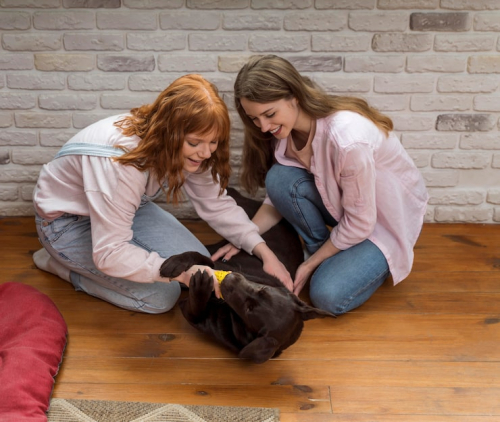
Welcoming a puppy into a household with young children often sparks visions of heartwarming companionship the kind of bond that shapes childhood memories for years to come. Yet the path to that harmony is rarely smooth. A toddler’s enthusiastic lunge or a puppy’s playful nip can quickly escalate into stress or even injury if left unchecked. The difference lies in deliberate, consistent preparation and training. As pet ownership continues to rise and families increasingly treat animals as full members of the household, learning to foster safe, respectful interactions between puppies and children has never been more important.
Your dog’s daily struggles pulling, mealtime anxiety, or reactivity don’t just cause stress, they chip away at the joy of being together. At Prime Paw, our positive reinforcement-based programs meet your dog where they are and build confidence, connection, and real skills. Our tailored programs in-person classes, coaching, and online resources help you enjoy calmer walks, relaxed routines, and a deeper connection. Ready for lasting change? Schedule a Prime Paw consultation today!
Preparing the Family Before the Puppy Comes Home
Success starts well before the puppy’s arrival. Begin by having open, age-appropriate conversations with your children about what dogs truly need and how they communicate. Make it clear that puppies are not stuffed animals they feel pain, experience fear, and go through a natural teething phase that makes their mouths especially sensitive. Role-play gentle touching using a plush toy or let children practice soft strokes on your own arm to contrast light pressure with squeezing or pulling.
Establish household rules from day one: always ask an adult before approaching any dog, never disturb a puppy while it eats, sleeps, or chews, and resist the urge to chase or corner the animal. Children who internalize these boundaries early develop a deeper sense of empathy and responsibility toward living creatures.
Orchestrating a Calm and Controlled First Meeting
The initial introduction sets the tone for everything that follows. Choose a quiet, open area ideally outdoors or in a neutral room so the puppy isn’t immediately overwhelmed by its new surroundings. Ask children to sit still on the floor while an adult gently lowers the leashed puppy nearby. Allow the puppy to investigate on its own terms. Reward relaxed sniffing or curious approaches with small treats and quiet praise.
Resist the impulse to let children scoop up or tightly embrace the puppy right away. Instead, guide them to present the back of a loosely closed fist for the puppy to smell, followed by slow, gentle strokes along the chest or side. Keep these first encounters brief five to ten minutes of calm interaction far outweighs a longer, overstimulating session that could leave the puppy anxious or over-aroused.
Building a Reliable Foundation of Basic Commands
Obedience training serves as an essential safety mechanism in homes with children. Focus on teaching four cornerstone commands: sit, stay, leave it, and a dependable recall. Each provides an immediate way to regain control during moments of high energy. A swift “sit” can halt a puppy mid-chase when children start running, while “leave it” prevents mouthing of hands, clothing, or toys.
Rely exclusively on positive reinforcement high-value treats, favorite toys, excited verbal praise to reward correct responses, especially in the presence of children. When every family member applies the same cues and rewards consistently, the puppy quickly learns that calm, polite behavior around kids leads to good outcomes.
Creating Daily Positive Experiences Around Children
Help your puppy associate children with pleasant things. Toss a few treats toward the puppy whenever kids enter a room, initiate low-key games such as gently rolling a ball back and forth, or allow the puppy to observe family meals from a calm distance without begging. These small, repeated pairings gradually shift the puppy’s emotional response from uncertainty to eager anticipation.
Simultaneously desensitize the puppy to handling. Regularly and gently touch sensitive areas such as ears, paws, tail, and muzzle while immediately following each touch with something delicious. This proactive conditioning reduces the likelihood of defensive reactions when curious little hands explore the puppy’s body in ways that feel intrusive.
Why Constant Supervision Remains Non-Negotiable
Even the best-behaved puppy and most mature child should never be left unsupervised. Playful nipping can escalate quickly, and an unintentional squeeze or pull from a young child can provoke a snap. Use baby gates, exercise pens, or crates to create secure separation when direct adult oversight isn’t possible. Preventing negative encounters early protects both the puppy’s confidence and the children’s safety.
Navigating the Most Frequent Behavioral Hurdles
Nipping ranks among the top complaints during puppyhood. When teeth meet skin during play, calmly redirect the puppy to an appropriate chew object. Interactive enrichment toys prove especially valuable here; they channel mental and physical energy productively, reducing the urge to mouth hands or clothing. Growing awareness of canine mental well-being has made these stimulating tools increasingly popular among thoughtful pet parents.
Overexcitement presents another common obstacle. Instruct children to freeze like a “tree” arms at sides, face turned away whenever the puppy jumps or becomes mouthy. The instant the puppy settles, offer praise and attention. This simple technique teaches both parties that calm energy restores interaction while frantic behavior ends it.
Recognizing When Professional Guidance Is Needed
Most families manage the early months smoothly with patience and structure. However, persistent signs of discomfort tucked tail, frequent growling, avoidance, or freezing warrant prompt intervention. A certified positive-reinforcement trainer or veterinary behaviorist can identify underlying issues and provide tailored strategies before minor tensions develop into lasting problems.
The Lasting Rewards of Early, Intentional Effort
The time invested in teaching mutual respect yields dividends that last a lifetime. Puppies raised with careful boundaries and positive exposure around children typically mature into patient, tolerant companions. At the same time, children gain invaluable lessons in reading body language, practicing self-control, and showing kindness to creatures smaller and more vulnerable than themselves.
In today’s households, where pets are cherished as true family members, thoughtful preparation transforms potential chaos into genuine connection. Clear expectations, abundant positive experiences, unwavering supervision, and a commitment to ongoing learning give that dream of a joyful, lifelong friendship every opportunity to take root and thrive safely.
Frequently Asked Questions
How do I introduce a new puppy to young children safely?
Choose a quiet, neutral space and have children sit calmly on the floor while an adult lowers the leashed puppy nearby. Let the puppy approach on its own terms rather than allowing children to grab or hug it immediately. Guide kids to offer the back of a loosely closed fist for sniffing, then gentle strokes along the chest or side. Keep first meetings short five to ten minutes of calm interaction is far more effective than a longer, overstimulating session.
What basic commands should I teach my puppy to keep children safe?
The four most important commands for households with children are *sit*, *stay*, *leave it*, and a reliable recall. A quick “sit” can stop a puppy mid-chase when kids start running, while “leave it” helps prevent mouthing of hands, clothing, or toys. Always use positive reinforcement treats, praise, and play and make sure every family member uses the same cues consistently so the puppy learns that calm behavior around children leads to good outcomes.
How do I stop my puppy from nipping and jumping on kids?
When your puppy nips during play, calmly redirect it to an appropriate chew toy rather than scolding it. For jumping, teach children to stand still like a “tree” arms at their sides, face turned away until the puppy settles down, then reward the calm behavior with attention and praise. Interactive enrichment toys are also helpful for channeling excess energy productively. If nipping or overexcitement persists despite consistent training, consulting a certified positive-reinforcement trainer is a worthwhile next step.
Disclaimer: The above helpful resources content contains personal opinions and experiences. The information provided is for general knowledge and does not constitute professional advice.
You may also be interested in: PrimePaw Homepage – Prime Paw
Your dog’s daily struggles pulling, mealtime anxiety, or reactivity don’t just cause stress, they chip away at the joy of being together. At Prime Paw, our positive reinforcement-based programs meet your dog where they are and build confidence, connection, and real skills. Our tailored programs in-person classes, coaching, and online resources help you enjoy calmer walks, relaxed routines, and a deeper connection. Ready for lasting change? Schedule a Prime Paw consultation today!
Powered by flareAI.co