
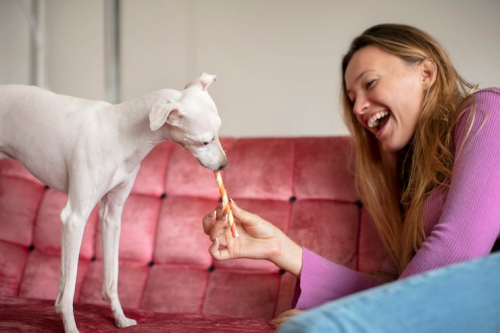
Nothing quite tests a new dog owner’s patience like discovering your favorite pair of sneakers reduced to confetti or a throw pillow turned inside out. Puppy chewing is one of the most common and most frustrating behaviors San Francisco dog parents face, whether you’re chasing your pup through the hilly streets of Bernal Heights or unwinding in a Dogpatch loft. Yet this phase doesn’t have to spiral into constant correction. In our guide to puppy chewing addressed with constructive alternatives and positive guidance, we explore why puppies chew and how thoughtful redirection paired with positive methods can transform the chaos into lasting good habits.
Your dog’s daily struggles pulling, mealtime anxiety, or reactivity don’t just cause stress, they chip away at the joy of being together. At Prime Paw, our positive reinforcement-based programs meet your dog where they are and build confidence, connection, and real skills. Our tailored programs in-person classes, coaching, and online resources help you enjoy calmer walks, relaxed routines, and a deeper connection. Ready for lasting change? Schedule a Prime Paw consultation today!
Why Puppies Chew: It’s Not Rebellion, It’s Development
Puppies explore the world with their mouths the same way toddlers use their hands. Between four and eight months, teething pain drives them to chew anything that offers relief as sharp new teeth push through sensitive gums. Even after adult teeth come in, chewing continues because it relieves boredom, eases anxiety, or simply feels satisfying. In tight urban spaces like the Mission District or Noe Valley, where apartments are compact and schedules are packed, that natural urge can quickly target shoes, furniture legs, or electrical cords if left unchecked. Understanding this developmental stage removes the frustration and replaces it with empathy and strategy.
The Cost of Punishment: Why “No!” Isn’t Enough
Many well-meaning owners reach for scolding, spraying water, or isolating the pup in hopes of stopping the behavior on the spot. These approaches may interrupt the moment, but they rarely teach what to do instead. Fear-based methods can actually increase anxiety, making the chewing worse or creating new problems like avoidance or aggression. Positive guidance, by contrast, builds confidence and trust the foundation every dog owner wants for a harmonious relationship that lasts well beyond the puppy months.
Constructive Alternatives: Give Them Something Better to Chew
The first step is smart management: remove access to forbidden items and replace them with approved ones right away. Rotate a variety of safe chew toys rubber Kongs stuffed with frozen peanut butter for a cooling effect, long-lasting bully sticks, or durable nylon bones so the novelty never wears off and your puppy stays engaged. When you catch your puppy heading for the couch, calmly redirect to a toy and praise enthusiastically the instant those teeth touch the right object. Consistency turns “wrong item” into “right item” without drama or raised voices.
In busy households across Potrero Hill and SoMa, quick redirection routines fit neatly into daily life. A five-minute play session with a flirt pole or a puzzle feeder before you leave for work can drain excess energy and reduce destructive chewing significantly. These small adjustments prevent problems before they start and make life with a puppy far more enjoyable.
Positive Reinforcement: The Science-Backed Path to Better Behavior
Rewarding the behavior you want works faster and lasts longer than punishing the behavior you don’t. Mark the exact second your puppy chooses the chew toy with a clicker or a bright “yes!” and follow immediately with a tiny treat or warm affection. Over time the pup learns that good choices bring good things. This approach also strengthens the bond between you and your dog, turning training time into quality time rather than conflict. Experienced trainers using positive reinforcement methods see faster progress because the puppy actively wants to participate.
Training Plus Socialization in One Safe Space
One of the smartest investments owners can make is pairing focused chewing lessons with supervised play. Puppies learn impulse control faster when they practice around other dogs in a controlled environment. Group classes that combine obedience cues with safe socialization help pups burn energy, read social signals, and generalize good habits beyond the living room. For city dogs in neighborhoods from Castro to Dogpatch, these sessions also provide the mental stimulation that prevents boredom-driven chewing at home. The combination of training and socialization in one supervised location creates well-rounded puppies who feel confident and secure.
Personalized Plans That Match Your Puppy’s Unique Needs
Every puppy is different. A high-energy herding breed mix needs more physical outlets than a laid-back companion pup. Experienced trainers assess individual behavior patterns whether the chewing stems from teething, separation anxiety, or simple curiosity and build custom plans around those observations. Positive reinforcement methods tailored to your dog’s personality deliver faster progress and fewer setbacks than one-size-fits-all programs. This personalized approach is especially valuable in San Francisco’s diverse dog community, where lifestyles range from active hikes in Bernal Heights to relaxed evenings in the Castro District.
Overcoming the Objections Every Owner Faces
Cost concerns are common, yet the expense of replacing ruined furniture or dealing with vet bills from swallowed objects often exceeds a short series of classes. Many owners also worry whether training will actually work for their particular puppy. Positive, evidence-based methods have helped countless dogs nationwide. As families increasingly recognize the long-term value of professional guidance, the pet training services market in the United States continues to grow steadily. Time is another frequent hurdle, but well-designed programs that combine training and socialization in a single supervised location make the commitment manageable even for busy professionals in San Francisco.
Practical Daily Routines That Prevent Setbacks
Start each morning with a short, focused training session using a handful of high-value treats. Practice “leave it” and “drop it” cues so you can safely interrupt unwanted chewing anywhere in the home. Provide at least two structured enrichment activities daily scent games, short walks with sniffing breaks, or interactive toys. Crate training or puppy-proofed playpens give you peace of mind when you can’t supervise. Consistency across everyone in the household matters most; one set of rules prevents confusion and accelerates progress. These routines fit easily into city life and deliver noticeable results within weeks.
Long-Term Benefits That Reach Beyond the Chewing Phase
Puppies who learn constructive chewing habits grow into adults who know how to self-soothe and make good choices when left alone. The same positive reinforcement foundation makes future training recall in crowded parks, polite greetings on city sidewalks far easier. Most importantly, the relationship between dog and owner becomes one of partnership rather than constant correction, creating calmer homes and happier lives in neighborhoods from Bernal Heights to the Castro District.
The chewing phase passes, but the lessons learned during it shape your dog’s behavior for years. By choosing constructive alternatives and positive guidance over punishment, San Francisco dog owners give their puppies the tools they need to thrive in a busy urban world. The result is fewer destroyed belongings, less stress, and a deeper bond that makes every walk through these vibrant streets even more enjoyable. With patience, the right support, and a clear plan, puppy chewing becomes an opportunity to build a lifetime of trust and understanding.
Frequently Asked Questions
Why does my puppy keep chewing everything, and will it stop on its own?
Puppy chewing is a normal developmental behavior, not defiance. Between four and eight months, teething pain drives puppies to chew for relief, and even after adult teeth come in, chewing continues to relieve boredom or anxiety. While the phase does pass naturally, building good habits now through redirection and positive reinforcement shapes your dog’s behavior for years to come.
What are the best constructive alternatives to stop a puppy from chewing furniture and shoes?
The most effective approach is removing access to forbidden items and immediately replacing them with approved chew toys rubber Kongs stuffed with frozen peanut butter, bully sticks, or durable nylon bones work well. Rotating toys regularly keeps novelty high and puppies engaged. Adding enrichment activities like puzzle feeders or a short play session before you leave the house can also significantly reduce destructive chewing.
Does positive reinforcement actually work for puppy chewing, and how do I use it?
Yes positive reinforcement is a science-backed method that works faster and creates longer-lasting results than punishment or scolding. The key is timing: the moment your puppy chooses the right chew toy, mark the behavior with a clicker or a clear “yes!” and immediately reward with a treat or affection. Over time, your puppy learns that good choices earn good things, which builds both better behavior and a stronger bond between you and your dog.
Disclaimer: The above helpful resources content contains personal opinions and experiences. The information provided is for general knowledge and does not constitute professional advice.
You may also be interested in: Veterinary Behaviorists Report Rising Cases of Separation Anxiety in Companion Dogs
Your dog’s daily struggles pulling, mealtime anxiety, or reactivity don’t just cause stress, they chip away at the joy of being together. At Prime Paw, our positive reinforcement-based programs meet your dog where they are and build confidence, connection, and real skills. Our tailored programs in-person classes, coaching, and online resources help you enjoy calmer walks, relaxed routines, and a deeper connection. Ready for lasting change? Schedule a Prime Paw consultation today!
Powered by flareAI.co